
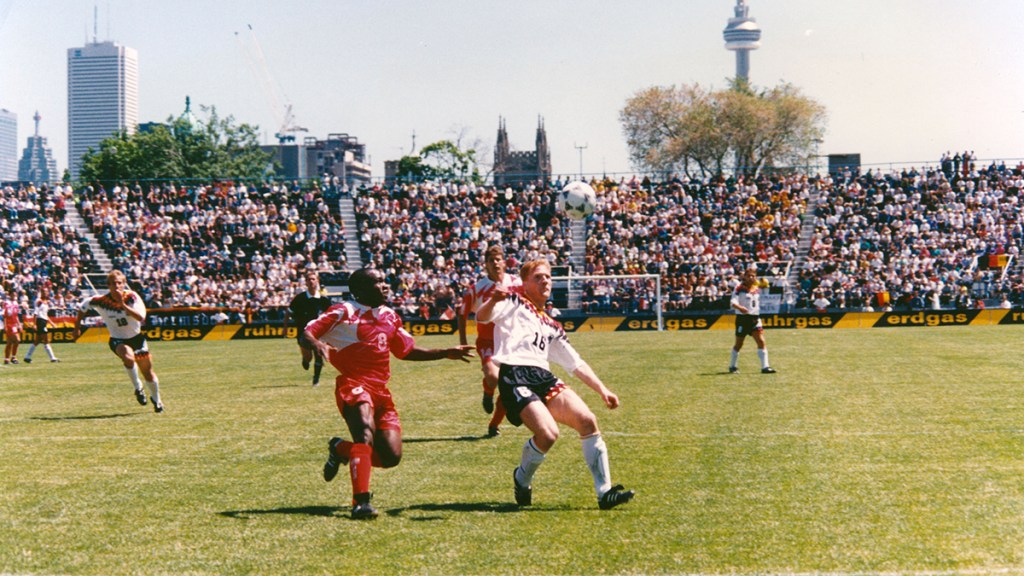

Ottawa has a long and proud sport tradition, and in this ongoing series, we present highlight moments and figures from our local sport history. The Ottawa Sport History Highlight series is produced collaboratively by the Ottawa Sports Pages and the Ottawa Sport Hall of Fame, which has welcomed almost 300 inductees dating back to its establishment in 1968.
The FIFA men’s World Cup is being played in North America for the first time since 1994, with Canada, USA and Mexico serving as co-hosts. All three host nations were awarded direct entries into the tournament, which doubled in size since the ’94 edition.
In this Ottawa Sport History Highlight Series feature, we look back on the career of Ottawa’s Lyndon Hooper, who came heartbreakingly close to a berth in the 1994 World Cup with Team Canada.

The sea of red in Vancouver and Toronto for the 2026 FIFA men’s World Cup is something Lyndon Hooper could only dream of during his career with the Canadian men’s soccer team.
From 1986 and 2005, he played for Canada in front of 120,000 fans, but just about all of the crowd was hostile in the fabled Estadio Azteca in Mexico City.
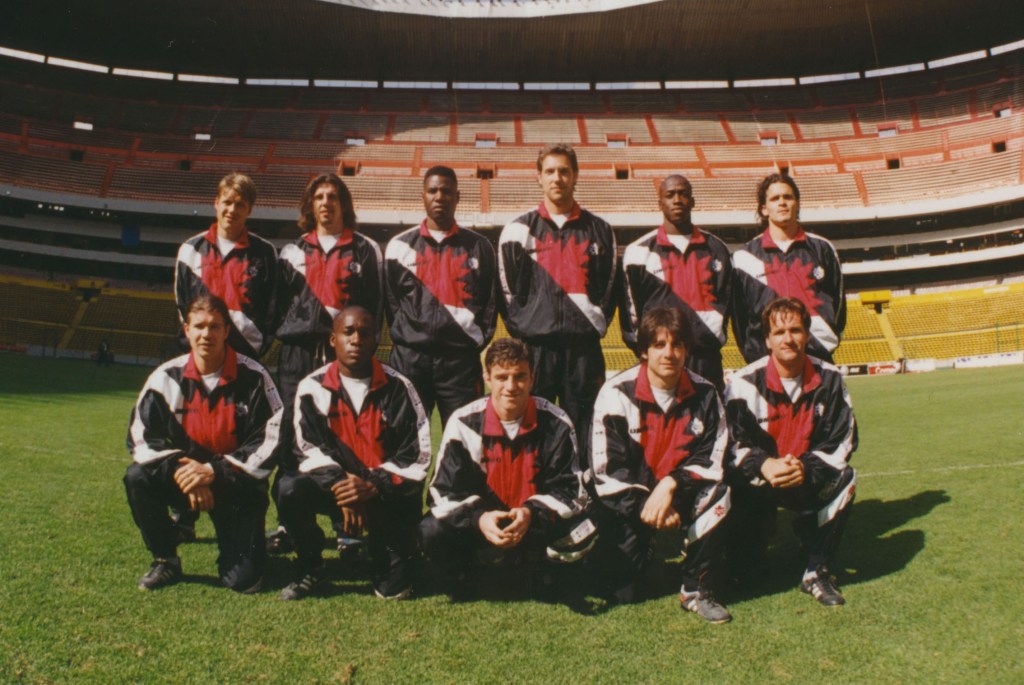
“I think one of the biggest thrills of all was the walk-out to the game,” Hooper reflected upon his induction into the Canadian Soccer Hall of Fame in 2011. “You come from under these stadiums, some of them majestic stadiums, for example in Mexico: you walk out from the underground belly of the stadium and you hear the roar from the fans, and then you get outside and the world comes at you and you’ve got 120,000 people there.
“That was always a big thrill – as equal as when we scored a goal.”
A steady and effective midfielder, Hooper appeared in 67 senior men’s international games for Canada, which remained inside the top-10 in all-time appearances upon his induction to the Ottawa Sport Hall of Fame in 2024.
Hooper is the lone male soccer player inducted into the Ottawa Sport Hall of Fame (his sister Charmaine is a member of the Hall along with Kristina Kiss, referee Carol Anne Chenard and the 2012 Ottawa Fury W-League team).
The Ottawa Royals and Nepean Hotspurs product represented Canada in three cycles of World Cup qualifying – the run towards the 1994 edition being the strongest, and most agonizing in finish.
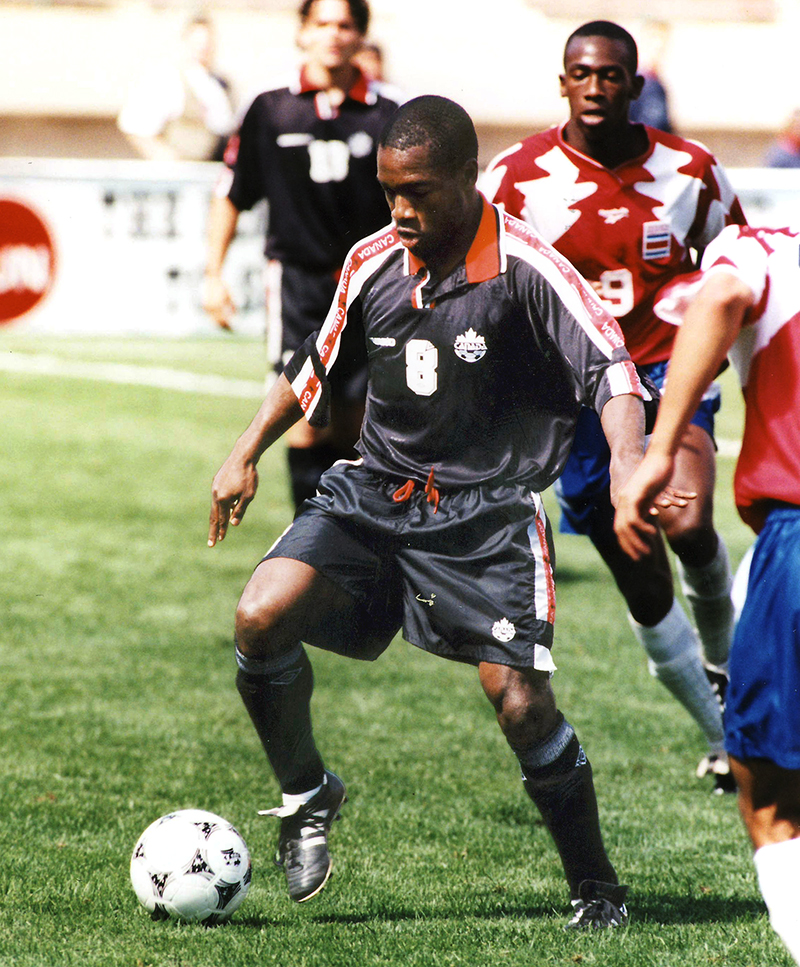
Canada was chasing a highly coveted berth in the first World Cup to be held in the U.S., with only 24 spots available in that era.
The Canadians showed strongly in their 12 matches across two rounds of CONCACAF regional qualifying. In the final round, Canada faced down road matches in El Salvador, Honduras and Mexico, where bands would play loudly until 4 a.m. outside their hotel, which had no air conditioning. Canadian players recall opposing fans hurling bags of urine at them after they’d been stretchered off the field due to injury.
They didn’t claim a World Cup berth outright behind powerhouse Mexico, but second-place Canada moved on to an intercontinental playoff with Australia.
Canada won the opening leg of the two-game series 2–1 in Edmonton in front of a very strong Canadian soccer crowd for the time of 20,000+.
Back in Sydney, Australia levelled the aggregate total with the first goal of the second match. But then Hooper scored in the 54th minute while on the run to put Canada back ahead.
Ultimately it proved to be a heartbreaking finish as the Aussies answered back in the 77th minute, got through extra time, and knocked Canada out in penalty kicks.
“During my time, we were unfortunate that only one or two (CONCACAF) teams ever got to go,” reflected Hooper, who was part of the “honour guard” of past players that was present for the game where the Canadian men clinched their berth for the 2022 World Cup in Qatar.
“I was so happy for the guys,” he told the Ottawa Sports Pages. “And it was incredibly nice to be a part of that. It really did feel like it had come full circle.”
Although they didn’t qualify for the big show, Canada wound up playing several of the world’s best teams in the lead-up to the World Cup, including a 1-1 draw with Brazil, who went on to win the World Cup six weeks later.
“It’s nice playing against some of the top players in the world,” underlined Hooper, who also played for Canada at the inaugural FIFA Futsal World Cup and was a 1989 Jeux de la Francophonie champion. “That was special. And so was traveling to different parts of the world.”
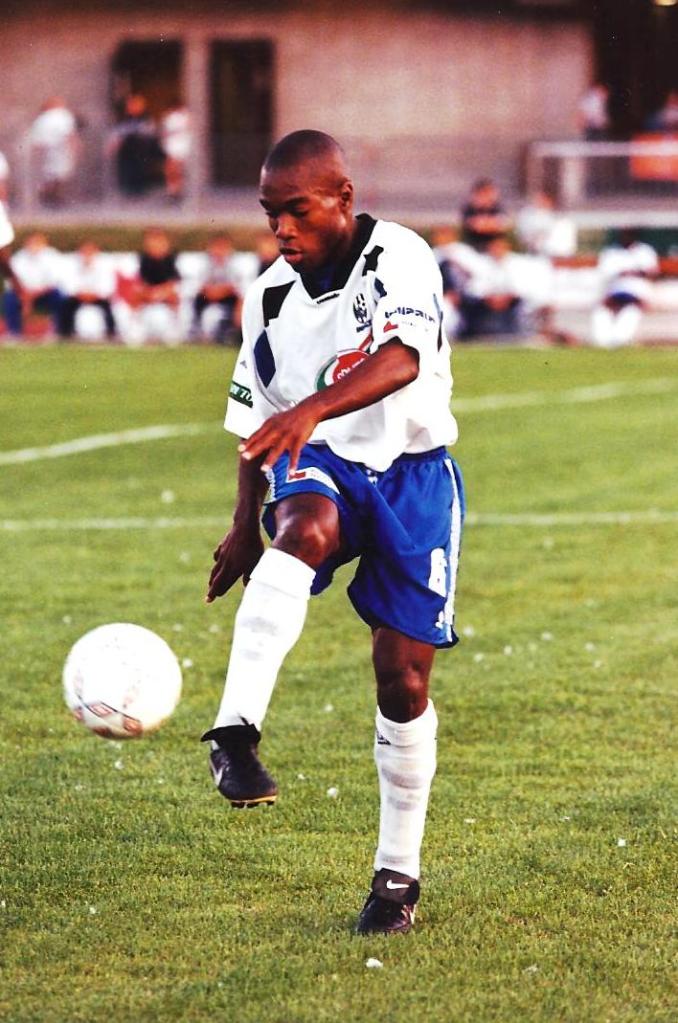
Alongside stops in England and the U.S., Hooper played professionally in Canada for most of his career. He started with the National Capital Pioneers in 1987, and played for the Montreal Supra and Toronto Blizzard in the original Canadian Soccer League, then later with the Montreal Impact and Toronto Lynx in the USL A-League.
Canadian pro soccer wasn’t lucrative for Hooper, but as a young, single person who was paying $200/month rent in Montreal, he could get by as a full-time athlete.
“It was a good standard,” highlights Hooper, who has a local park named after him in Kanata’s Arcadia neighbourhood. “People ask me, today how would those teams stack up against the current (Canadian Premier League) teams?
“The consensus I hear from us older guys is that the top teams in the old CSL would hold our own against today’s top teams.
“But sometimes as you get older, you get better in the stories.”
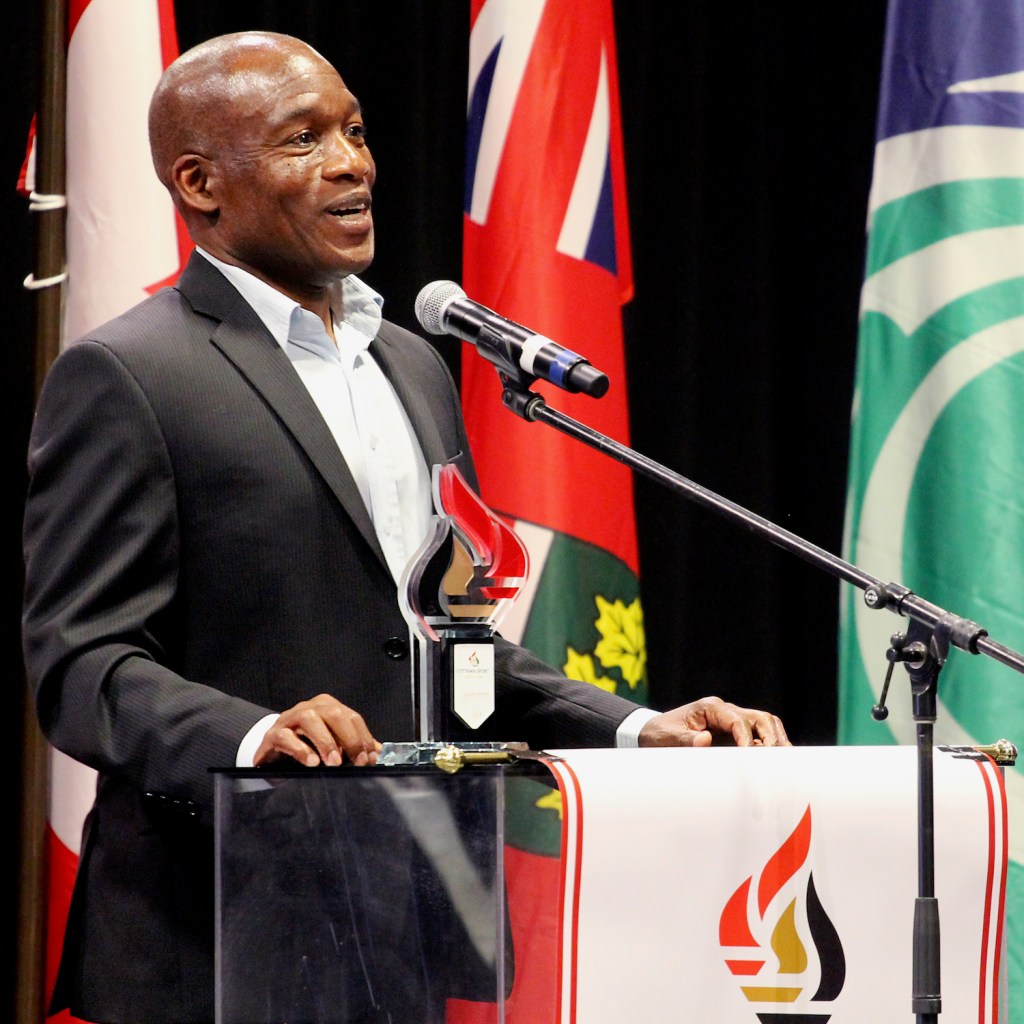
Hooper went to “the dark side”, as some called it, and became a match official. He now works in coaching development, his off-field career with Ontario Soccer has now surpassing the length of his playing career.
The whole journey was fairly unlikely for a boy whose first sporting love was cricket in Guyana. While his diplomat father was posted in Zambia, Hooper discovered soccer, playing at every lunch and recess. He finally joined organized soccer at age 12 with the Nepean Hotspurs, and he was grateful that his family stayed in Ottawa following his father’s five-year assignment.
Hooper is pleased to see more players involved in Canadian soccer nowadays with stories like his – who have come to Canada from other parts of the world – and feels pride seeing such a diverse group on the pitch wearing the maple leaf.
“Definitely, there’s been growth on the player side,” signals Hooper, who was among the first few Black players to play for Team Canada and remains among an underrepresented group in managerial and administrative leadership positions. “Part of that, I think is the population dynamics are kind of changing, because a lot of foreigners are coming in from countries where soccer is in their background, And you certainly see that on the national team.”


Leave a comment