
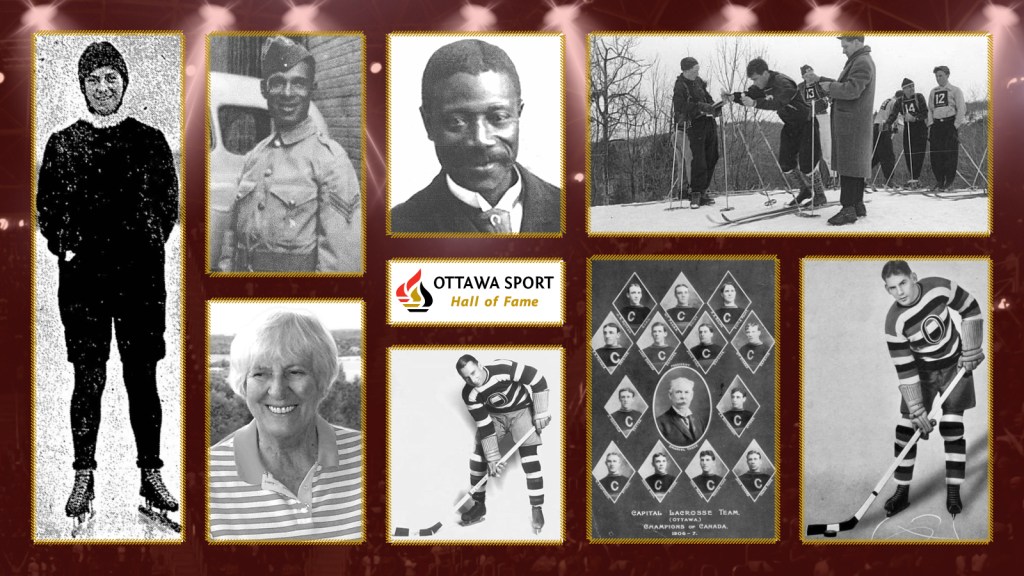
OTTAWA, ON – On Wednesday, May 27th at Lansdowne Park’s Horticulture Building, the Ottawa Sport Hall of Fame will induct the Class of 2026 into our local sports shrine. Each week leading up to the ceremony, the Sport Hall will share an article on our upcoming inductees. Today’s feature highlights the eight inductees to be celebrated within the Hall’s Legacy category.
They come from many different disciplines – boxing, golf, hockey, horse racing, lacrosse, skiing and speed skating – but Joe Barber, Paul Barber, the 1906 Capital Lacrosse Club, Vera Charlebois, Bud Clark, Françoise Desbiens, Joe Lamb and Allan Shields were among the best in many of the most popular pursuits during the earlier days of our city’s sporting history.
And they will all be welcomed into the Ottawa Sport Hall of Fame as Legacy category inductees as part of the Class of 2026 on May 27.
Paul Peter Barber (horse racing)
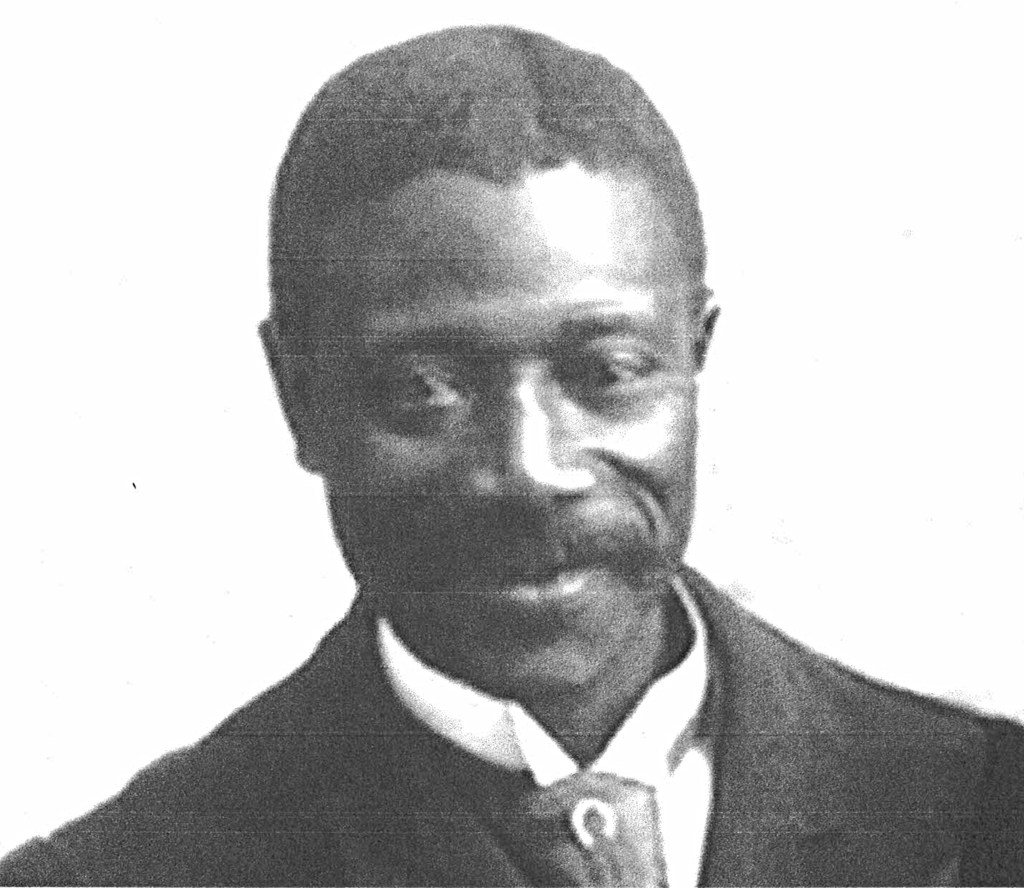
Paul Barber was among Ottawa’s most successful horse trainers and harness racing reinsmen around the turn of the 20th century.
Born as a child of slaves in Kentucky, he learned how to care, train, ride and race horses on the Barber Farm. Once he landed in Ottawa in the 1880s, Barber arrived with an established reputation for his tremendous skills and knowledge in equine sport, earning additional notoriety as a rare Black jockey/trainer in the U.S.
Barber worked as a horse handler for many of Ottawa’s most prominent and wealthy families of the era. McCandish stables provided his first assignment, and over time, he became well-known for his innovations in racing equipment and the technical aspects of horse training, plus veterinary care.
In 1905, Barber was called upon to train 16 new horses for the municipality’s police force, making him the City of Ottawa’s first Black employee. He joined the Ottawa’s Horsemen’s Club as an employee and mentor around the same time.
Barber also excelled as a talented harness racing driver. He raced his sulky (a harness racing cart) in Ottawa and beyond, recording victories in the three-minute class race at Winchester Horse Racing in 1894 and 1897.
He also raced on the frozen Ottawa River and Lac Leamy during a time when horse racing was the king of sport in Ottawa’s Victorian society. His experience and knowledge, later shared with others, helped build the horse industry in the area for the years ahead.
Joe Andrew Barber (boxing)
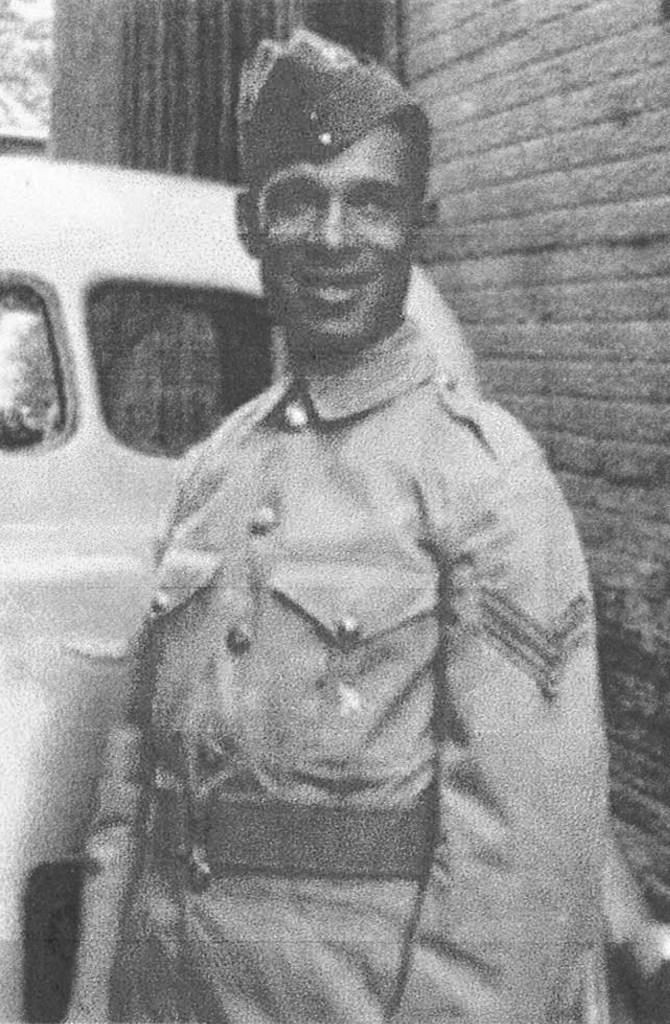
Born in 1899, Joe Barber carried on a family tradition of success in sport, although his pursuit differed from that of his horse racing father, Paul Barber.
Boxing gloves were the younger Barber’s ticket to notoriety as he became one of the region’s best pugilists in the early 1900s.
While working as an usher at the Imperial Theatre in 1916, Barber became better known for his talents in the ring, often taking on opponents over his weight class.
The 125-lb. fighter frequently headlined cards at the Cartier Square Drill Hall, where he defeated Babe Moore in 1920 in front of a crowd of 2,000.
He boxed at many other venues and clubs around the city during the sport’s heyday in Ottawa, including St. Bartholomew’s Sunday School and the Ottawa-New Edinburgh Club.
Barber took his boxing talents to Montreal in pursuit of a spot on Canada’s Olympic team, but faced racist verbal threats and physical violence there, after which he almost quit boxing.
He turned his attention to serve in the Governor General’s Footguard Militia unit, where he became the first Black man in the regiment. Barber achieved the rank of corporal, and also earned plenty of respect while boxing for his unit against other militias.
Barber later worked in the government for Public Works, coached at the Ottawa Boys Club and fundraised for youth with charitable events.
1906 Capital Lacrosse Club
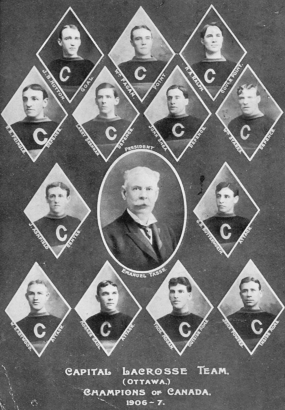
In the early 1900s, Ottawa’s summer sports schedule centred around lacrosse, with the Capital Lacrosse Club drawing crowds similar to modern-day National Lacrosse League gatherings.
The 1906 season proved to be a historic one for the Capitals, although it started off on the wrong foot when the season’s first planned practice at Varsity Oval (University of Ottawa) instead turned into a team meeting since no one wanted to leave the warmth of the wood stove on a cold, wet early-May evening.
But there was no stopping the Capitals and their legion of supporters once play got underway.
Among the early-season highlights: the Club drew 2,000 spectators when it hosted 1906 Olympic marathon champion Billy Sherring of Hamilton for a running exhibition, while 400 Ottawans took up the offer of a $1.20 Canadian Pacific return trip to Brockville for a game against Cornwall.
The Capitals beat the reigning Minto Cup-champion Montreal Shamrocks 5-2 on the road en route to a 7-1 season and a four-way tie at the top of the National Lacrosse Union standings with the Toronto Tecumsehs, Toronto Lacrosse Club and Cornwall Colts.
Late in the season, the team’s coach Tommy Crown was dropped after a dispute with the executive over bringing trial players to exhibition games, and raising his players’ complaints that their usual three free tickets per game had been cut to two.
But the talented Capitals remained unstoppable as they defeated the Colts 8-2 in their two-game, total goals semi-final series.
Following a 4-0 road win over the Toronto Tecumsehs in the opening game of the final, the Capitals brought home the Minto Cup with a dominant showing in front of 5,000+ spectators at Lansdowne Park.
Ottawa often spent three-minute segments in Toronto’s end during the contest, usually finishing with a goal. The Ottawa Journal described the team’s defence as “a stone wall” and praised their “beautiful exhibition of teamwork.”
The Capitals broke open a 2-1 game in the second quarter with eight goals in a row. H. Gaul scored five, J. Powers got three and W.M. Starrs had two in the match as Ottawa waltzed to a 14-3 aggregate win.
It had been a very clean game until a Capitals player responded to a hard check by using his stick like a tomahawk over his opponent’s head, the Journal described. After the Toronto player recovered from the blow, he replied with a pair of uppercuts that knocked the Capital player over, and then he sat on him.
Six police officers had to jump in to break up the ensuing melee as fans rushed the field too. Officials finally restored order and assessed each combatant a 20-minute penalty.
Toronto’s captain later said at a dinner reception at the Russell House Hotel (Sparks at Elgin) that the Capitals were the best team playing lacrosse, and that he always battles his opponents as hard as possible on the field but later meets them as friends.
The Capitals were regarded as “champions of the world” for winning the Minto Cup, and the club later backed up the claim during a six-week tour to Europe where they steamrolled many British clubs.
The 1906 Minto Cup-champion Ottawa Capitals included club president Emanuel Tasse and 13 players: J.B. Hutton (goalie), W. Fagan (point), H.A. Ralph (cover point), R.B. Pringle, L. Brennan, J. Shea and W.M. Starrs (defence), J. Ashfield (centre), G.B. Butterworth, W. Eastwood and H. Gaul (attack), T. Hogan (outside home) and J. Powers (inside home).
Vera Charlebois (golf)
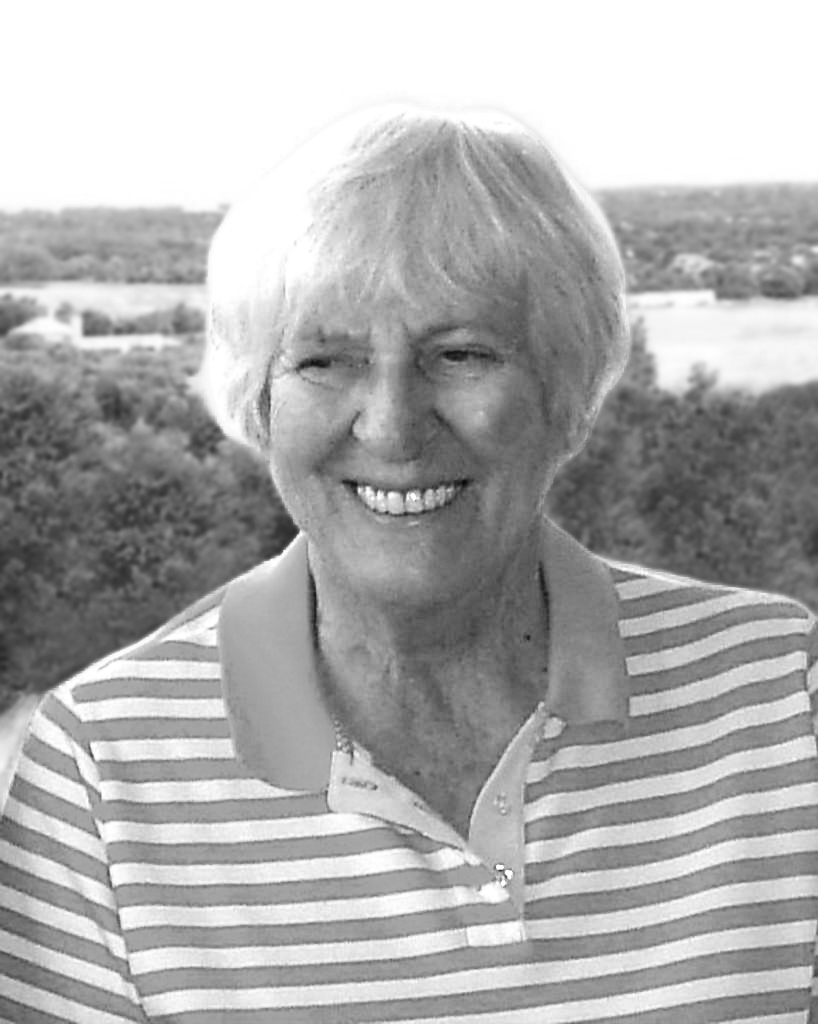
Vera Charlebois reigned the capital region’s women’s golfing ranks for a quarter-century during the 1970s, ’80s and early ’90s.
Born in 1930, Charlebois took up golf in the early 1960s. The left-handed golfer won the Chaudière Golf Club women’s club championship an extraordinary 22 times between 1967 and 1994.
She won the Canadian Ladies Golf Association Ottawa District Women’s Championship four times (‘70, ‘75, ‘76 and ‘80) and the Senior Women’s Championship six times (‘81, ‘82, ‘84, ‘85, ‘92 and ‘95). She also captured the Four-Ball Championship on five occasions (‘76, ‘77, ‘79, ‘80 and ‘84) and won the 1981 Marjorie Strong 2-Ball Championship.
Charlebois earned back-to-back Quebec Senior Women’s Championships in 1982 and 1983, she represented the province on the Senior Women’s Team (‘82, ’83, ’84 and ‘94) and scored a bronze medal at the Canadian Senior Women’s Championship in ‘84.
She earned tournament titles in Massena, NY and Daytona Beach, FL during her career, and she won three consecutive Kingston Cataraqui Eastern Provinces Medal – Match Championships from ‘75-‘77, but couldn’t repeat in ‘78 following a heart attack early that year.
Over her career, Charlebois recorded two holes-in-one and held course records at Chaudière (now Château Cartier), Hylands (North) and Manderley.
The Ottawa Valley Golf Association Hall of Famer served on club and district executives, and she became a teaching pro at Emerald Links Golf Club, where she instructed, inspired and mentored countless local golfers.
Bud Clark (skiing)
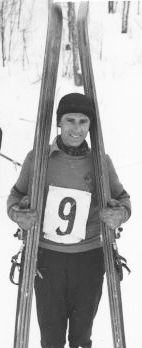
Ottawa’s William G. “Bud” Clark enjoyed a storied career on snow in the 1930s and in Canadian sport leadership.
Born in 1910, Clark became a champion Nordic Combined skier when the discipline included cross-country skiing, alpine skiing and ski jumping. The Ottawa Citizen deemed him “the finest all-round skier to come out of Ottawa and the Gatineau hills.”
Clark developed his winning ways by capturing the National Capital Division Cross-Country Championship in 1929 and the Intercollegiate All-Round Ski Championship and Combined Championship Title in Lake Placid, NY, in 1931.
Clark returned to Lake Placid the following year for the 1932 Winter Olympic Games in his first of two Olympic appearances for Team Canada. He finished 38th in the men’s 18 km cross-country ski race for his top Olympic result, just ahead of his 39th-place performance at the 1936 Games in Garmisch-Partenkirchen, Germany.
Clark went on to win the first-ever Canadian University Ski Meet in Montebello, QC in 1934, placing first in the 10-mile cross-country race, second in the downhill and third in ski jumping. The following year, he won the Dominion Champion Ski Runner Race, which stretched over 32 miles from Ste. Agathe to Shawbridge, QC.
Clark’s accomplishments continued on the administrative side of sport. He was an original member of the 1930s Canadian Amateur Sports Advisory Council, which wrote documentation that served as the basis for fitness and amateur sport legislation.
He also served as a director of the Canadian Olympic Association, and then as technical committee chair and president of the Canadian Amateur Ski Association in the 1950s. And then in 1966, the Canadian Ski Hall of Famer was recognized as the first recipient of the Maki Memorial Trophy for Sportsman of the Year.
Françoise Desbiens (Mougeot) (speed skating)
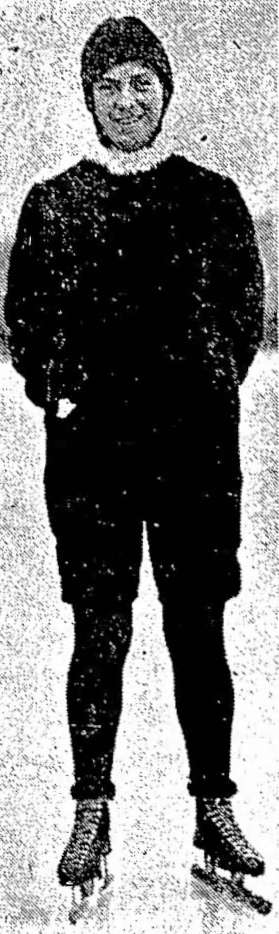
Before Barbara Ann Scott captured Canada’s hearts with her 1948 Olympic figure skating title, there was another lesser-known Ottawa woman on blades who excelled on ice.
Born in 1911, Françoise Desbiens was a speed skating marvel. She started as a “playground skater” but developed into one of Canada’s best while training and competing at the Plouffe Park outdoor speed skating oval.
She swiftly won her first title at the Ottawa Speed Skating Championships in 1925 and repeated as female under-18 champion in the 220-yard race over the next four years.
After she won the 1927 Dominion U16 girls’ 220-yard and 440-yard titles in Toronto, City of Ottawa Council hosted a reception for Desbiens to celebrate her achievements.
She snagged two more national gold medals (440, 880) the following year at the same site, completing the 440-yard event in 46 seconds. And in 1929, Desbiens was once again a Canadian champion in both the 220- and 440-yard events in Montreal.
The opportunity to strive for greater global recognition wasn’t available to Desbiens at the time, with women’s speed skating events only added to the Winter Olympic Games in 1960.
Desbiens retired from competitive speed skating following her standout junior career, but she continued to participate and excel in other sports. She was a strong hitter at the plate in softball, a renowned sprinter in the 50- and 100-yard track and field events, and she thrived on the tennis courts too.
Joe Lamb (hockey)
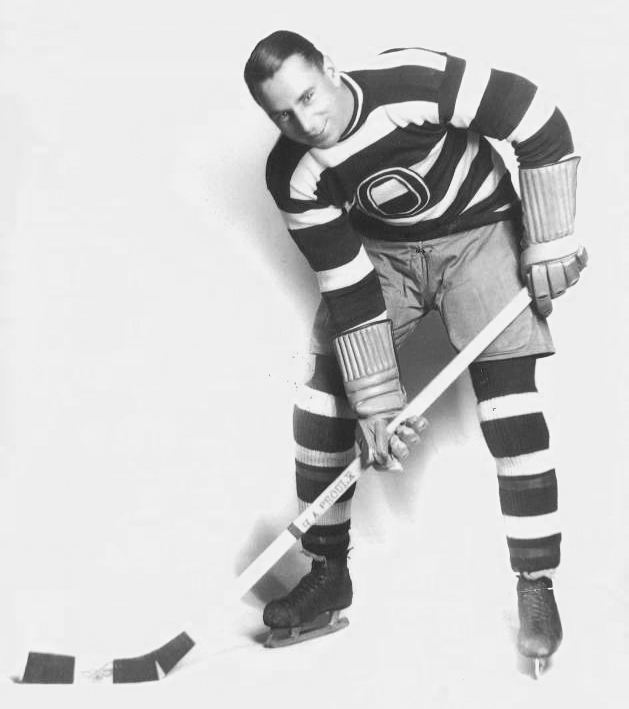
Joe Lamb, a Lieutenant-Colonel and Canadian Armed Forces World War II veteran, led an incredible sports career in the early National Hockey League and in golf.
Lamb was born in Sussex, New Brunswick as one of eight children to the town’s mayor. He began playing senior amateur hockey at age 16 in Sussex and then moved to Montreal to play junior with the Royals before soon joining the Montreal Victorias for a 14-game exhibition tour of Europe where Lamb scored 28 goals.
Lamb had an exceptional run for seven teams over 11 seasons in the NHL, scoring 110 goals and 101 assists in 443 games from 1928 to 1938.
He played for the original Ottawa Senators before the club missed a year and ultimately folded, collecting 29 goals, 20 assists and a league-leading 119 penalty minutes in 44 games during his last season in Ottawa.
A loyal and confident heavy hitter, Lamb also played for the Montreal Maroons, the New York Americans, the Boston Bruins, the Montreal Canadiens, the St. Louis Eagles and the Detroit Red Wings.
He finished his pro hockey career with the Springfield Indians of the International American Hockey League before turning his focus to the Royal Canadian Army Service Corps as WWII began.
The order and the discipline of the military suited Lamb’s style, and the Member of the British Empire rose to the rank of Lieut.-Col. before retiring in 1958.
All the while, Lamb collected numerous golf titles, including the 1936 Maritime Men’s Golf Championship, the Ottawa Hunt and Golf Club men’s crown in 1938, 1939, 1947 and 1959, and the 1949 Ottawa District Golf Association men’s title.
Lamb served on the ODGA and Ottawa Valley Curling Association executives and is an honorary life member of the Canadian Curling Association and the Ottawa Hunt and Golf Club.
He was the first player to wear number 99 in the NHL.
Allan Shields (hockey)
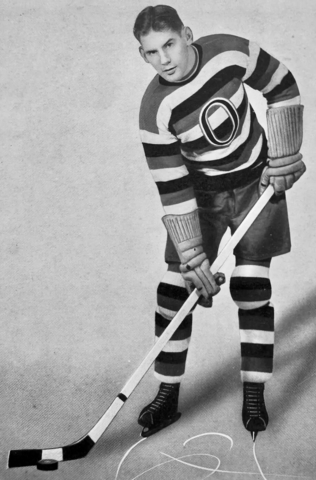
Born in 1907 in Ottawa, John Allan Shields was a sensational hockey player, remembered for his rapid rise to professional hockey success and his solid defensive presence on the ice.
In his early years, Shields played the sport on outdoor neighbourhood rinks with makeshift teams, like many young boys, until the star player for the Ottawa Montagnards, Ebbie Goodfellow, landed Shields an opportunity with the team.
Shields’ performance in the first game of the season was so remarkable that he finished that same year with the Ottawa Senators, completing his jump from a local team to the NHL in less than a year.
Shields wound up playing professional hockey for 17 years, 11 of them in the NHL. He dressed for the Senators, the Boston Bruins, the New York Americans and finished his NHL career with the Montreal Maroons in 1938.
Shields won the Stanley Cup with the 1934-35 Maroons, sweeping the Toronto Maple Leafs 3-0 in the final to win the club’s second and final Cup. He was presented with a Key to the City alongside other players from Ottawa on the Maroons.
Shields then played in the American Hockey League before joining the Washington Lions as a player and coach in 1942. That same year, during his Air Force service, he was posted to Arnprior, ON, where he became a player and the coach of the Arnprior RCAF Sabres hockey team. Postwar, he officiated in the AHL until 1948.
A member of the first NHL All-Star team ever assembled, the defenceman scored 42 goals over 459 career NHL games. “Big A”, to his teammates, “commanded such respect that he rarely had to prove it,” the Ottawa Journal‘s Eddie McCabe wrote upon Shields’ passing in 1975.
MAY 27 OTTAWA SPORT HALL OF FAME INDUCTION EVENING
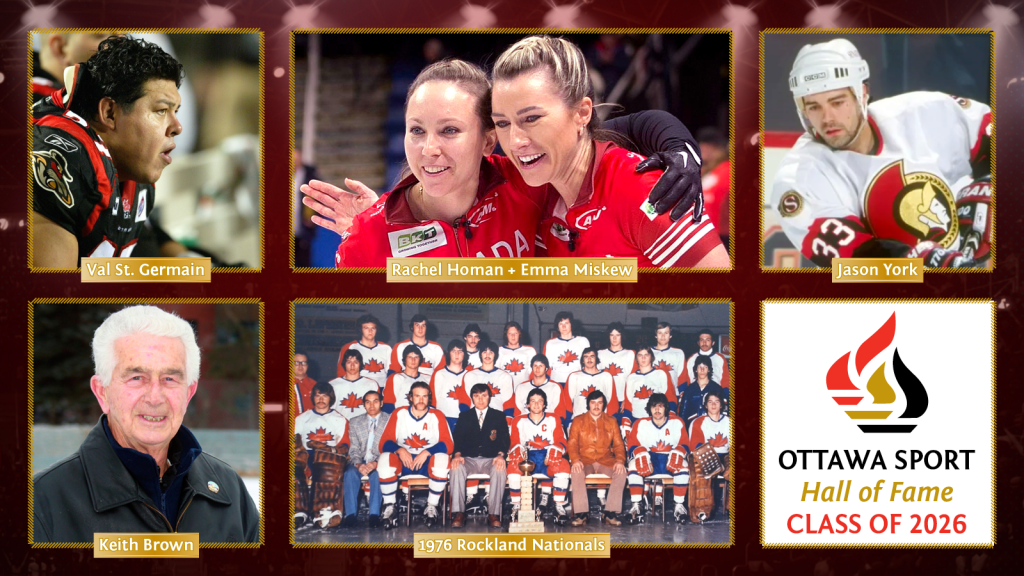
All of the Legacy category inductees are deceased, however several will have family members present at the Ottawa Sport Hall of Fame’s 2026 ceremonies to celebrate their honours.
The Ottawa Sport Hall of Fame will be welcoming four new athletes, a builder and a team as part of its Class of 2026, plus the eight historic honourees in the Legacy Category.
Details and full features on all the upcoming inductees and Legacy members have been shared on the Hall’s website at OttawaSportHall.ca and through the Ottawa Sports Pages.
Tickets for the Wednesday, May 27th Induction Ceremony at Lansdowne Park’s Horticulture Building are now sold out!
Sponsorship opportunities are available. See OttawaSportHall.ca/Sponsorship for more details.

About the Ottawa Sport Hall of Fame:
The Ottawa Sport Hall of Fame is a non-profit organization, which documents, curates and celebrates outstanding achievement in local sport heritage. The Sport Hall is overseen by a volunteer Board of Directors to maintain and preserve our rich sporting legacies. Each year, the Hall of Fame Board receives nominations from the public and selects new inductees to be honoured in the Hall.


Leave a comment