

OTTAWA, ON – On Wednesday, May 28th at Lansdowne Park’s Horticulture Building, the Ottawa Sport Hall of Fame will induct the Class of 2025 into our local sports shrine. Each Wednesday until the ceremony, the Sport Hall will post an article on an aspect of the event. Today’s feature is a profile on 2025 Inductees, the Barrett Family of Leitrim.
2025 SPORT HALL INDUCTEES – BARRETT FAMILY:
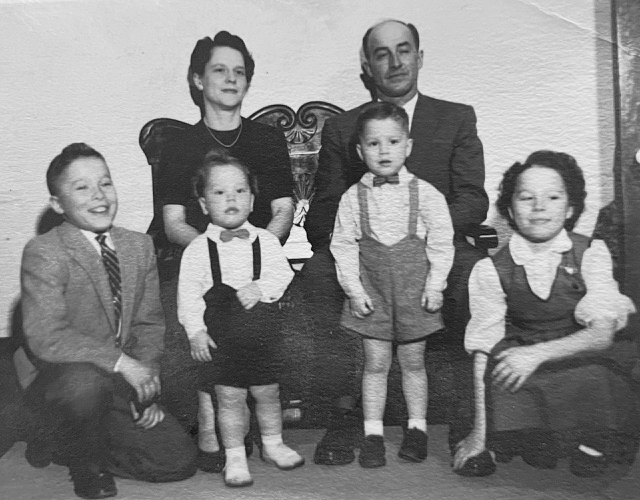
Grown from the family farm of Fred G. Barrett and Doris Kemp – and the outdoor rink next to Leitrim Public School – the legendary multi-generation Barrett family has provided leadership and excellence in local hockey for over 65 years. Here is a look at each of those figures, compiled by Jack Teevens.
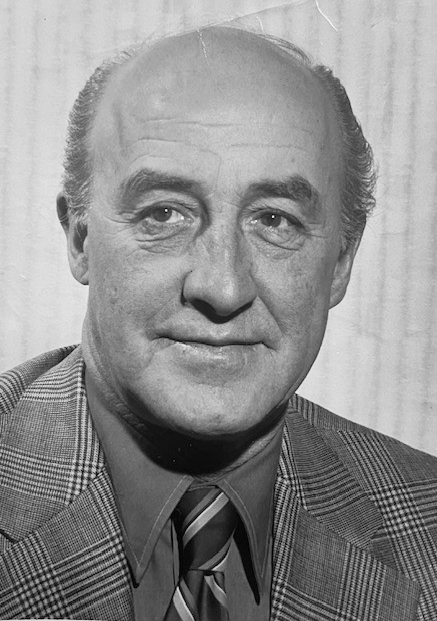
Fred G. Barrett
(October 2, 1914 – July 3, 1984)
The late Fred Barrett Senior was a dairy farmer throughout his life. He took over the family farm at the young age of 17, managing 150 acres of his own land and another 150 acres of leased land. His property had been settled and developed by his Irish ancestors, Fred’s grandfather in the 1870s.
Mr. Barrett lived his entire life in the century old white farm house with green trim. This iconic house, south on Bank Street just past Leitrim Road, is known by thousands of Ottawans as the “Barrett farm house” and is where his son John continues to live today.
Fred was passionate about farming, the local community, municipal government, and sport. Fred always valued education – he was a bilingual graduate of Glebe Collegiate.
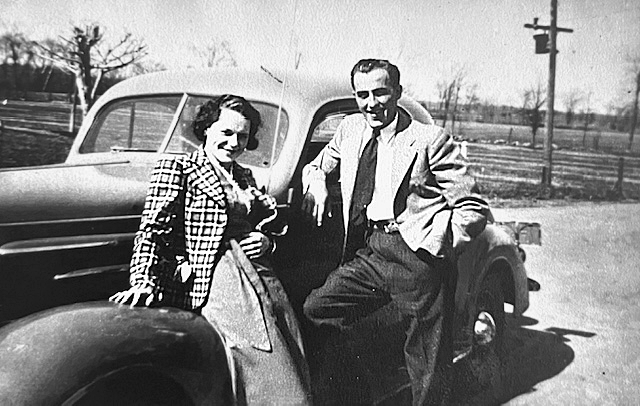
In the ‘40s, Fred married his childhood sweetheart and neighbour Doris Kemp and they proceeded to be blessed with four children born between 1949 and 1958.
The love of sport ran deep in Fred’s veins, so it’s not surprising that the children were encouraged to participate and play any and all sports from an early age. The outdoor rink beside the Leitrim Public School at the corner of Bank and Leitrim Road was the winter playground for the Barrett boys and sister Joan.
The ice and boards were maintained by volunteers from the village, always led and coordinated by Fred Barrett Sr.
He recognized early on that the young boys of the Leitrim and Gloucester communities deserved a chance to play in some level of organized hockey, so Fred reached out to a well known Ottawan, Ev Tremblay, who he had heard was forming a new league.
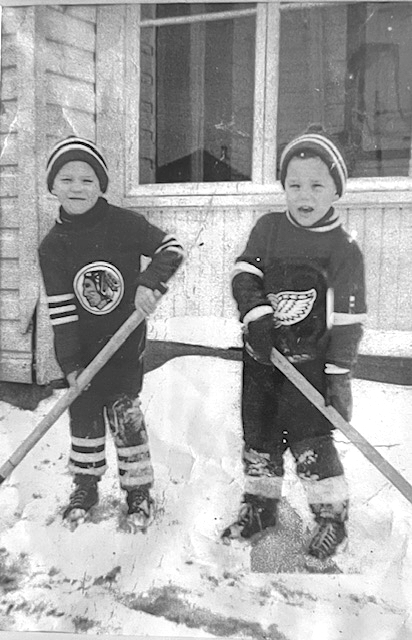
Tremblay had a vision of a league where local neighbourhoods would form a team (by age group) and play against other areas of the city. They believed the players deserved the opportunity for consistent weekly scheduled games and the outdoor rinks were as always, dependent on the variable Ottawa weather.
Through his community connections, Tremblay secured ice time at the iconic “Old Ottawa Auditorium” on O’Connor Street for weekly games to be held on Saturday and Sunday mornings. All that was missing now was funding – money to pay for the ice time and hockey uniforms.
Tremblay knew his friend Fred had connections and could raise the money. As the local President of the Milk Foundation of Ottawa, Fred secured sponsorship from the Association for the ice time. Fred knew the builder Robert Campeau through his many interactions over land use and development in the Township of Gloucester. Fred convinced Campeau to buy sweaters for all the teams in the league, selling him on the idea that his company name would be proudly displayed across every player’s chest, front and centre on every team.
The Ottawa Cradle League was born, with the first season set to go in 1957. The registration costs were $1 per player. The league started with four teams but quickly expanded the next year to 12 teams.

It would be at the Old Aud on O’Connor Street that thousands of Ottawa youngsters would, for the first time, skate and play hockey in an indoor arena. Their first experience with playing hockey on a team, with uniforms, painted blue and red lines on the ice, real nets, and referees to control their enthusiasm.
The small Village of Leitrim was represented with teams called the Flyers, playing games against neighbourhood clubs 50 times their size – teams from Ottawa East, Ottawa West, Alta Vista, Eastview, the Glebe, etc. Fred Sr. was always behind the bench for multiple teams representing Leitrim and Gloucester Township for so many fun years.
Gloucester’s first Mayor drove construction of many sports centres

Often referred to as an inspiring and “folksy” community leader, Fred Sr. first entered municipal politics by winning a seat on the Gloucester Township Council in 1949. He would serve throughout the ‘50s, ‘60s and ‘70s, rising to Deputy Reeve in the late ‘70s. Fred G. Barrett became the first elected Mayor of the new City of Gloucester in 1982.
His passion for sport, especially hockey, was displayed when he convinced the Township to build an indoor state of the art arena on the site of the old outdoor rink in the small village. The Leitrim Arena opened in 1969 (renamed The Fred Barrett Arena in ‘84) after securing federal and provincial monies offered under the Centennial Year banner.
Significant fundraising work by the Gloucester Lions Club – yes, headed by Fred Barrett – was also critical to the arena funding. The arena would become the new home of the M&W Rangers of the Central Junior “A” Hockey League in the late ‘60s and early ‘70s.
As the Township and later the City of Gloucester population grew, especially in the east end of the community, Fred encouraged and led the Council in gaining an agreement to fund (again with assistance from secured Centennial Projects money) to construct an even more elaborate facility built on Ogilvie Road, the Earl Armstrong Arena (1971).
He would not stop there; Barrett pushed for and supported the addition of numerous community rinks that Ottawa residents continue to enjoy today – Lois Kemp (Blackburn) Arena in 1974, Potvin Arena in 1978 (now part of Richcraft Sensplex) and the Bob MacQuarrie (Orléans) Recreational Complex in 1980.

In 1968, Fred became the Charter President of the Gloucester Lions Club. He contributed countless hours of community service and fundraising to support local sport programs. Hockey was often front and centre, but ball diamonds, soccer fields and tennis courts were all assisted by the Lions Club.
In 1973, Barrett learned of the potential sale and relocation of the M&W Rangers. A small group of shareholders, led by Fred Sr., purchased the M W team and thus he became a founding shareholder in the formation of the Gloucester Rangers. The Rangers provided a team for local youth to continue to play Junior “A” Hockey in their hometown.

Joan L. JOHNSTON (née Barrett)
(April 11, 1949-present)
Fred and Doris’ eldest child Joan is a graduate of Gloucester High School and Carleton University, class of 1970. Since 1978, Joan has been the co-owner/operator of a horticultural business (Knippel Garden Centre) located on the Barrett family farm on Bank Street.
Growing up in the 1950s and ’60s Joan loved to skate just like the rest of her family. Whether on the farm pond, or later the Leitrim outdoor rink, Joan was often seen playing shinny with her younger brothers, and she could most definitely hold her own. Be warned if you tried to steal the puck off her stick or stop her on a rush – you may be pulling yourself out of a snow drift.
Unfortunately, at the time, there was no avenue for girls to play organized hockey against their peers. Minor hockey’s rules were very strict: no girls playing on boys’ teams. Joan was relegated to cheerleader with Doris in the stands. She spent hours, days, weekends, travelling with the family to the many community rinks to cheer on her brothers. Oh how she would have loved to play with her friends, to have a “league of their own.”
But in sport, and especially in hockey, blood lines run deep. Both of Joan’s sons, Kennedy and Marty Johnston, played their minor hockey in Gloucester and excelled in the sport. Kennedy and Marty won the 1995 EOBJHL championship with the Metcalfe Jets Jr. ‘B’.
Kennedy would go on to play for the Ottawa Jr. ‘A’ Senators and later for the University of Ottawa Gee-Gees, all while advancing his education.

Marty played junior hockey in the “Q” for the Hull Olympiques for three seasons, winning the Memorial Cup Championship in 1996-97. After junior, he went on to play at Dalhousie University in Halifax. Marty tried the pro-ranks playing in the American Hockey League (Lowell Lock Monsters) and in the East Coast Hockey League (Florida, Trenton, Long Beach, Peoria) before concluding his playing career in the British National League for Edinburgh, Scotland.
Marty came back home and coached the Carleton University Ravens for 10 years, seven as head coach. He also organized summer camps for kids to learn and enjoy the game at the Carleton Ravens Ice House.
Marty secured his first pro coaching job with the Manitoba Moose of the AHL, spending five years with the team. The organization liked his body of work on the farm team, his way with today’s players, and Marty was elevated to the role of assistant coach with the Winnipeg Jets in 2022. Marty remains behind the bench as the Jets set their eyes clearly on chasing the Stanley Cup next spring.
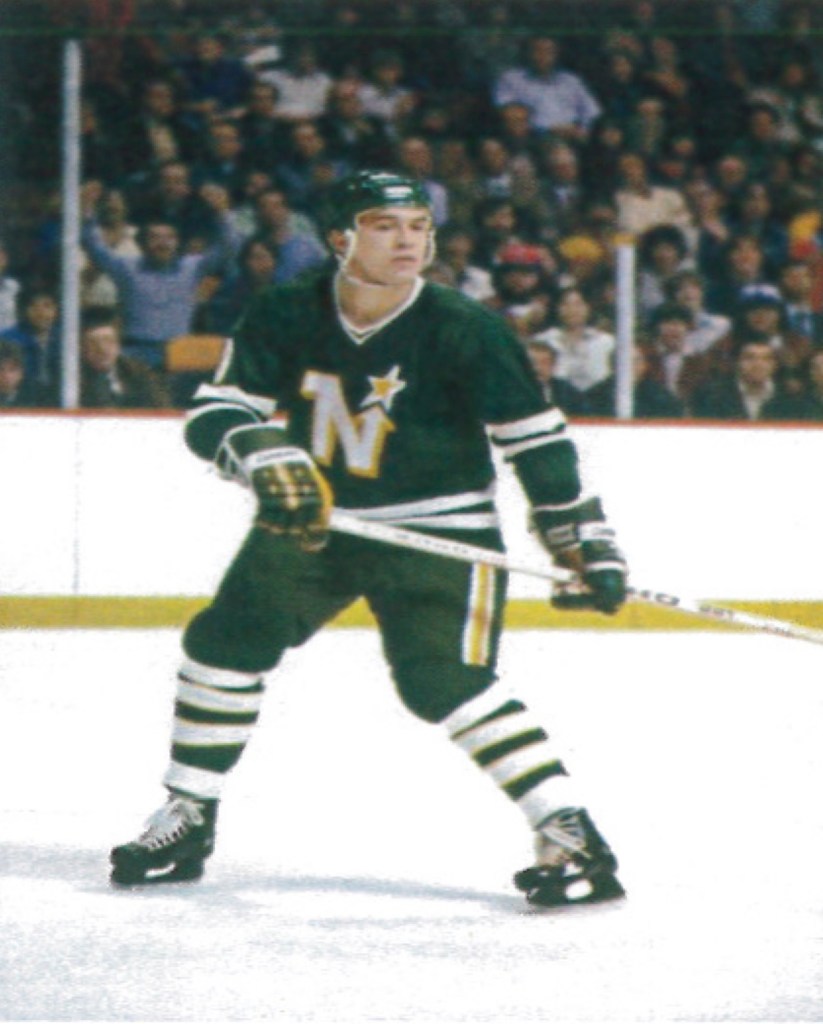
Fred W. Barrett
(January 26, 1950 – Present)
Like thousands of Canadian boys in the ‘50s, Fred W. Barrett developed a love for the game of hockey on outdoor rinks. The pond on his father’s farm would begin to freeze over in late December each year, and it would be here that he’d lace up his skates in the snow drift and pretend to be playing hockey in front of thousands at the The Forum or Maple Leaf Gardens.
His friends from the local village of Leitrim were always welcomed to join him for a game of shinny. Soon the parents in the area decided an outdoor rink should be built, beside Leitrim Public School, so the friends could play real games, with real boards to keep the puck out of the snow. An agreement was reached to use the school’s water supply to flood the rink.
Young Fred spent hundreds of hours in the winters on that outdoor rink, developing his skating, shooting and passing skills. He was excited to hear from his father that he would be playing against the City boys in the newly created Cradle League in the season of 1957-58, indoors at the Old Aud. Fred excelled in the league, his natural competitive spirit rising to lead his teams to many victories.

“Even then, we knew Fred possessed a special talent for the game,” recalls Ruggles Pritchard, a teammate from those years. “But then, as now, as good a player as he was, he was a better teammate and friend.”
By the early ‘60s, Fred was beginning to catch the eye of local hockey people. Even though he was in his early teens, Fred was invited to tryout and he made the Ottawa Capitals in the Central Junior League. Fred was now up against boys two and three years older, yet he patrolled the blue line with a physical presence that other teams quickly became well aware of.
Brian Lynch was the Ottawa area scout for the famed Toronto Maple Leafs organization. He had watched Fred progress from the Cradle League and step into play against an older, more experienced, group in a good junior league. Lynch was duly impressed and in his mid-season report to Leafs management, he commented he had another excellent prospect for the club. He suggested this solidly-built farm boy may have a bigger upside for development than two recent players Lynch had sent to Toronto from Ottawa – the famed winger Ron Ellis, and slick-skating defenceman Jim McKenny (both Cradle League graduates) had been scouted and signed by Lynch in recent seasons.

At the time Ellis was turning heads in his rookie season with the Leafs and McKenny was starring with the Marlies, Leafs Coach & GM Punch Imlach had developed a respect for Lynch’s keen eye for talent, so upon reading his report, he dispatched the legendary King Clancy to Ottawa to check out the prospect. Clancy saw Fred play in a Capitals game and then watched him go through some skills on the outdoor rink in Leitrim. Clancy was equally impressed.
Back at the Barrett farm house, Clancy and Lynch sat at the kitchen table and enjoyed a favourite refreshment: “just two cubes please.” Clancy suggested to Fred and Doris their boy had talent and that he should move to Toronto in hope of realizing his dreams. Clancy signed Fred Jr. to play for the Marlboros in the 1966-67 season. Fred Jr. was only 16 years old. Fred played four seasons for the powerful Marlies club in the mid-to-late ‘60s. He won the Memorial Cup in the spring of 1967 – his first season with the team.

Although Fred had to fight through and recover from a couple of difficult injuries those years with the Marlies, he continued to progress, and by the time his 1970 National Hockey league draft year approached, he was considered a top prospect.
Fred was drafted by the Minnesota North Stars 20th overall in the second round of the NHL draft. He impressed the coaches and management at his first training camp and cracked the North Stars lineup for the 1970-71 season. Another Ottawa Cradle League graduate was playing in the best hockey league in the world and the whole Leitrim/Gloucester community felt great pride in his accomplishment.
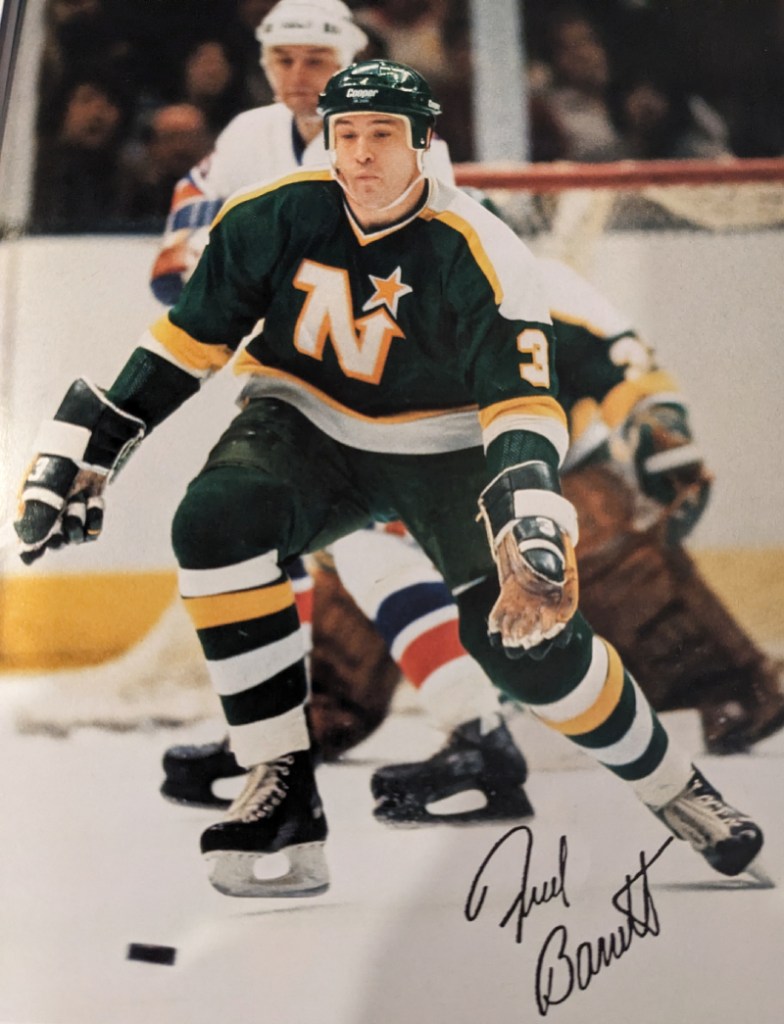
In his rookie season, Fred played in 57 games, recorded 13 assists and 75 penalty minutes. His physical, stay-at-home style, a defensive defenseman, was well received by his teammates, coaches and management.
“Steady Freddie” (media & fans’ nickname) and his North Stars teammates would experience some challenging, re-building years in the mid ‘70s, but they drafted well and by the 1979-80 season had a very competitive team.
A true highlight for Fred was eliminating the Canadiens dynasty team in the ‘80 Stanley Cup quarterfinals while Montreal was chasing their fifth straight Cup. The next year, the North Stars made it to the ’81 Stanley Cup finals only to lose to a powerhouse New York Islanders team in five games. Former NHL coach, GM & TV commentator Harry Neale called him “perhaps the most underrated defenceman in the league” during that run.
Fred would go on to a stellar 14-year career, playing in 745 NHL games, scoring 25 goals, 123 assists for 148 points. Along the way, the rugged defender was assessed 671 PIMs. Fred played 13 of his 14 years with the North Stars, winning the team’s award for top defenceman four times. His final year was with the Los Angeles Kings in the 1983-84 season.
Gloucester firefighter co-founded Sens Alumni group
After his hockey career, Fred joined another team, the Gloucester Fire Department. He would serve his community when in emergency need for 25 years.
Fred was also soon back in arenas all through the Ottawa and Valley region, as coach for a variety of teams and levels with the Leitrim Minor Hockey Association (LMHA). He served as a mentor to numerous minor hockey coaches, serving as the Head of Coaching and Development for the LMHA.

Fred was one of the founding members of the Ottawa Senators Alumni Association, playing in charity games and fundraising events throughout the Ottawa region. In 1992, Fred and his brother John were co-presidents of the Alumni group and both played in the first Senators alumni game vs. the Montreal Canadians alumni in a sold out Ottawa Civic Centre.
This Alumni group has raised close to $2 million to support important community projects – all on volunteer time, with all funds awarded to organizations in need.
Fred’s love for the sport of hockey played out not just behind the bench but he continued to play the game in men’s hockey leagues in the city. Fred was honoured in 1993 by being inducted into the Ottawa Valley Hockey Old-timers Honour Role.
George T. Barrett
(May 20, 1956 – Present)
On every outdoor rink across our great country, there is always one, hopefully two, players willing to sacrifice life and limb, willing to dive in front of on-coming pucks – willing to play goalie. George Barrett was that kid on the Leitrim outdoor rink in the early ’60s.
Watching Hockey Night in Canada every Saturday evening on the black & white TV in the Barrett living room, George developed an admiration for the star goalies of the time: Glenn Hall, Johnny Bower, Terry Sawchuk. He would do his best to replicate their ‘stand-up’ and ‘play the angles’ goalkeeping style on the outdoor rink.
With his older brother Fred practicing his shot, preparing for a junior game or training camp, George was always there, always between the pipes. Not surprising that if he could react to stop a future NHLer’s shot, he would have no trouble blocking shots for his minor hockey teammates in the ’60s.
George’s passion for the goalie position would grow through his early teams in minor hockey, and yes, he started in the Cradle League in the ‘60s, representing Leitrim. George would go on to excel as a netminder as he progressed through the age groups with the Gloucester Minor Hockey Association, playing competitive hockey in the ODHA and shining as he backstopped many teams to victory.
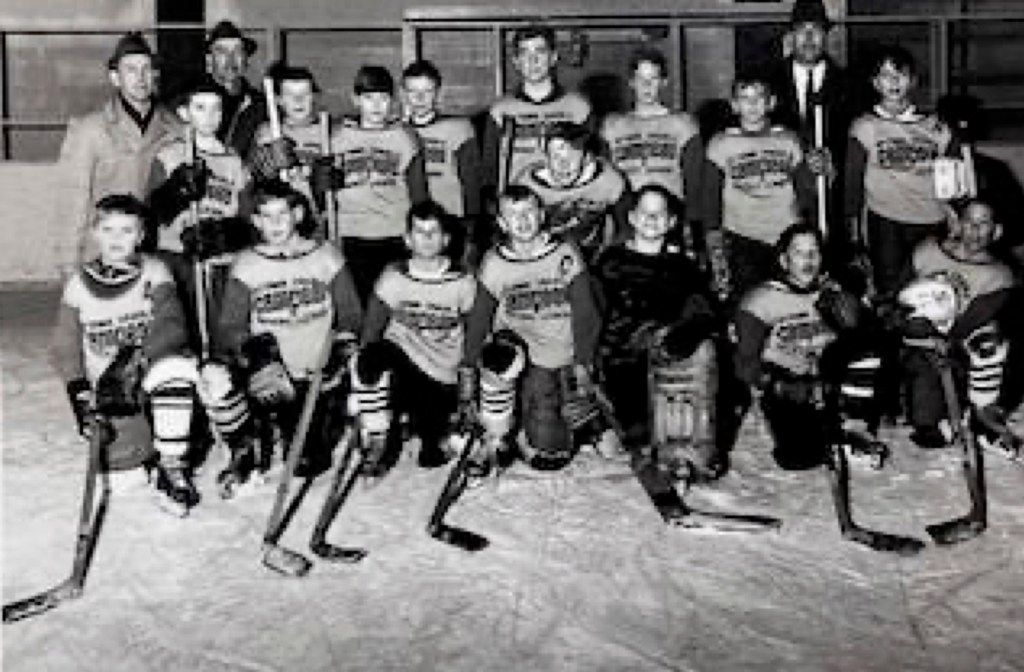
After completing minor hockey, it was not a surprise George would follow his older brother’s footsteps into the junior hockey circuit. Working his way up, starting with the ODHA Junior “B’ Gloucester Astros, next season the Almonte Astros, the following season making the M&W Rangers, then being the star goaltender for the newly minted Gloucester Rangers in the Central Junior “A” Hockey League.
After his Rangers team was eliminated from the playoffs in the spring of 1976, the eventual league-champion Rockland Nationals were readying for the Centennial Cup playdowns. CAHA rules of the day allowed teams to add a few players from their league to bolster their line-up. George’s play that year, and especially in the playoffs, caught the attention of the Rockland coach – Shawville native Brian Murray. Brian invited George to join the Nationals for the Centennial Cup playdowns and George enthusiastically accepted.
The Nationals had built a powerhouse team with many former QHL players on the roster. Though they faced many challenges, tough teams and series, the Nationals emerged as the Canadian Junior “A” Tier II Champions and hoisted the Centennial Cup. George’s junior career would end the following season when he was recognized as the top goalie in the CJHL.
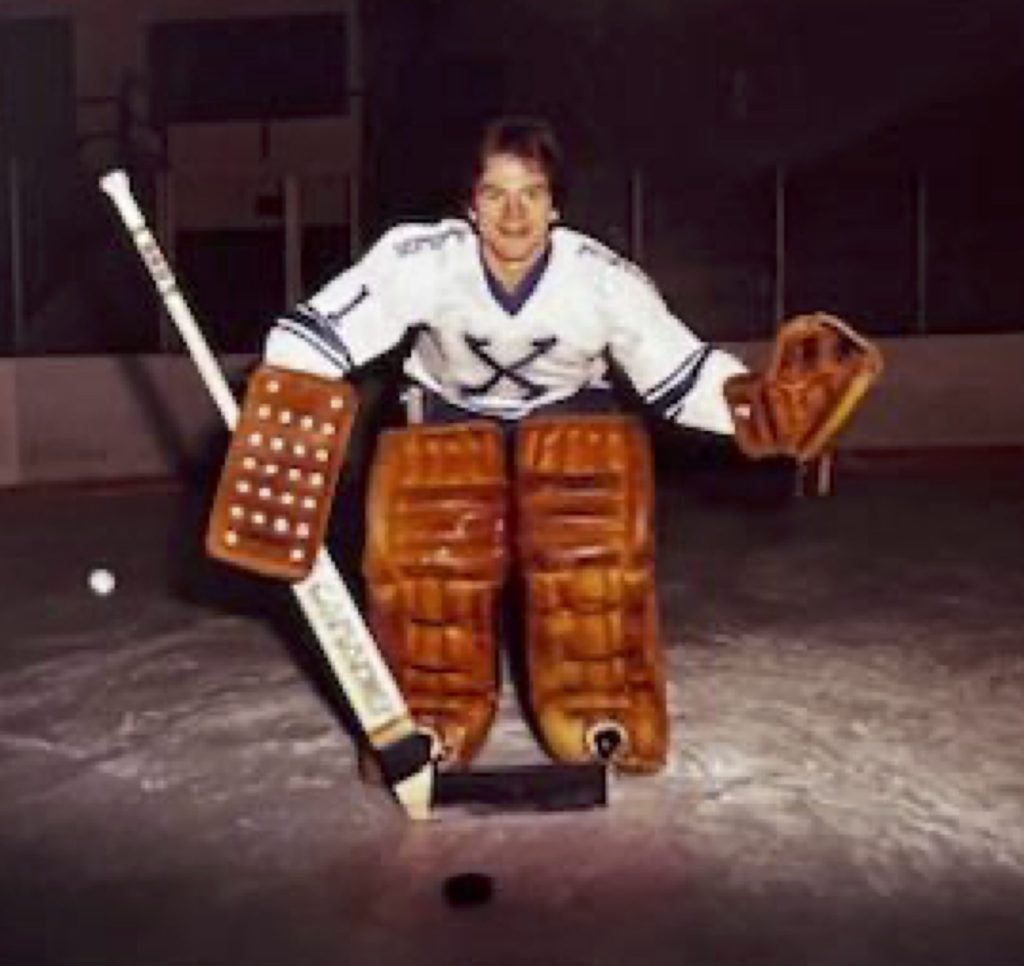
George accepted an offer to go down east to play nets for the St. Francis Xavier University hockey team, allowing him to continue to play and grow in the sport he loved. There, he played two years in the very competitive Atlantic University Conference, winning an Atlantic title in 1978 and earning top goalie honours at the national championships.
George’s play at St. FX caught the attention of the Canadian Olympic program. They were preparing to choose the Canadian team to compete in the 1980 Lake Placid Olympics. He was invited and made the team to play a series of exhibition and tournament games with the great honour of wearing the Team Canada sweater.
George excelled with a 1.75 goals-against average, winning the top goalie award in the Grenoble pre-Olympic Tournament in France. It was an excellent audition, but choosing a Canadian Olympic team is a challenge. George’s Olympic dream was not realized in 1980, but he was very grateful to receive the Olympic Scholarship from Hockey Canada to further his education.
George’s play with the Canadian team, especially at the tournament, caught the attention of pro scouts. He was offered and quickly accepted a try-out for the Minnesota North Stars. George was in the mix near the end of camp with six goalies remaining and three teams requiring tenders for the North Stars and the farm teams. It was a difficult decision, but George was thinking long-term and chose to return to St. FX to study for his teaching degree instead of chasing his pro hockey dream in the minors.
Followed father’s footsteps into politics, helped build sports facilities
At the age of 16, George started as a goalie instructor for the Gloucester Hockey Association. He continued as goalie coach and instructor in hockey schools for close to 40 years until 2013. After his playing days at St. FX from 1984-1989, George was the hockey coach at the Nova Scotia Agricultural College in Truro. From 1989-2013, George was a teacher at Gloucester High School and the head coach of the Gators boys’ hockey team.
“We quickly came to appreciate his ability to work with our most challenging students and to become their staunch advocate as they reintegrated into regular classes,” commented Pritchard, his mentor and fellow teacher. “He was, and is, the consummate team player, and the positive example he provided for both our students and staff was unforgettable.”
In 1997, George was co-founder and director of Barrett’s Basic Skills hockey camp. The program operated for 17 years and over 3,500 hockey players attended the summer hockey camps. For two decades, George coached in the Leitrim Minor Hockey Association and the Gloucester Rangers competitive ODHA teams, often involved with three teams per season.
In 1994, George followed his father’s footsteps and entered municipal politics. From 1994-2000, he was a Ward Councillor for the City of Gloucester. Always thinking of the importance of sport in the community, he negotiated to have six soccer fields, a football field and two baseball fields built by the City adjacent to the Fred G. Barrett Arena.
It was soon thereafter and under his guidance the Arena Complex was expanded to include double rinks. During the construction of the refurbished and expanded Fred Barrett Arena, George learned DND planned to close the Uplands Arena. He changed their mind, negotiating a three-year lease with CFB Uplands to provide practice and playing ice for the LMHA.
John D. Barrett
(July 1, 1958 – Present)
The destination of the third boy and fourth child of Fred and Doris Barrett likely could have been predicted when John was born back on Dominion Day in 1958. Legend has it that John was born with a smile on his face, and it’s never left, why would it? Family stories suggest John could skate before he could run. All in for fun and games, John lived the dream by playing in the NHL, and everything else is a bonus.
John’s earliest memories are no doubt shivering on the Leitrim outdoor rink where no matter the temperature, no matter a snowstorm, he would practice there for hours, working on his skating, playing shinny with his close friends and cousins, and always firing endless pucks at his brother George the Goalie in nets.
By the time John was lacing up his skates with teammates in the Cradle League – most two or three years his senior – John’s eldest brother was a hero figure for him. John had seen Fred play some junior games for the Ottawa Capitals, and when John was playing defence on the Leitrim mosquito team in the Cradle League, his eldest brother was chasing his hockey dream in the big city of Toronto, playing for the farm team of the mighty Maple Leafs.
Yes, his parents were adamant about excelling in school, but make no mistake, John’s sole focus as a youngster was to play hockey on Saturday night, on TV, on HNIC, in the NHL. There were many a bruised body and ego that tried to get in John Barrett’s way as he progressed through minor and junior hockey, on his way to achieving his goal.
John was a capable hard-nosed stay-at-home defenceman throughout his minor hockey days. He admired and copied his brother Fred’s style of play. If it worked for Fred, he was convinced it would work for him. John played his way through all of the minor hockey age levels and would often gain the benefit of some extra games. With his father coaching his brother George’s teams, if ever the older team was short a player, especially a defender, John’s equipment was in the trunk and he could be ready in 10, ready to play against and take on the older kids.
John got better as he aged and began to grow in stature, becoming one of the bigger boys in his own age group. After minor hockey, it was not a surprise that he made the CJHL where he was a key member of the 1975-76 Gloucester Rangers. His brother George was between the pipes that year.

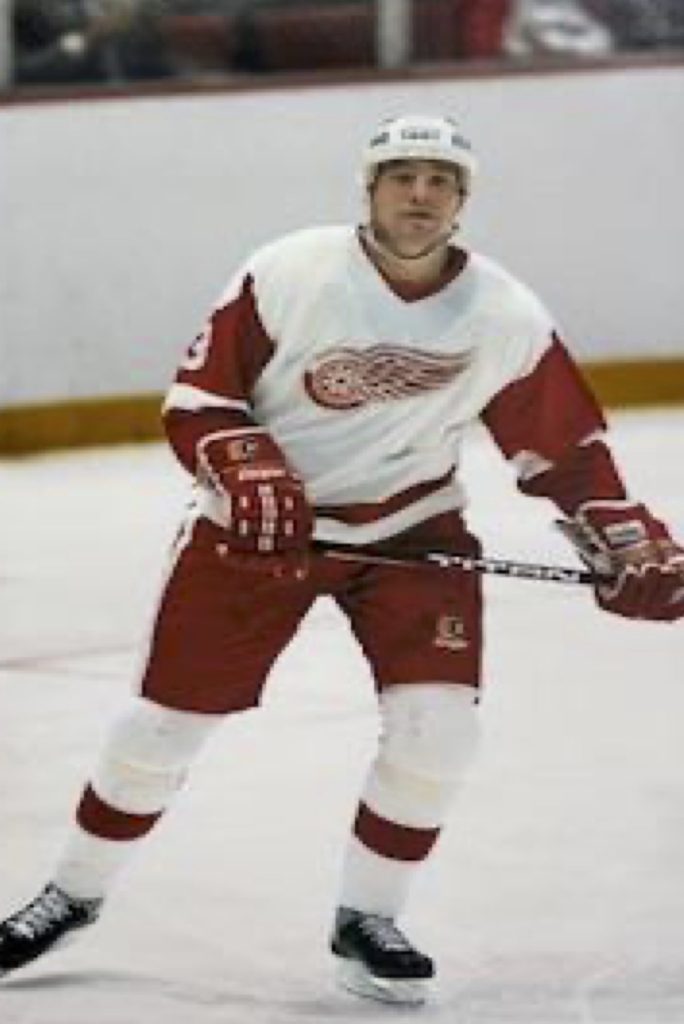
John’s rookie year showed great promise and he was offered a chance to move to Windsor to play in the OHL for the Spitfires. John had two very productive and solid years for the Spitfires, putting up 24 and 26 points and collecting penalties at a rate expected for a physical defenceman. It was this pro-style game that started to attract the attention of NHL scouts. The comparisons were definitely there – he guarded the back end in a very similar fashion to his brother, then starring with the North Stars.
In the 1978 NHL draft, John was selected by the Detroit Red Wings 129th overall. In his first pro year, he was assigned to the Kalamazoo Wings of the International Hockey League. It was a strong club, made up of seasoned veterans and young pros like John. The Wings had a great playoff run and won the IHL’s Turner Cup championship. His first year pro, and John was already a champion.
John experienced the life of a young pro hockey player, playing for three different teams in his first two years. While with the Adirondack Wings in November of 1980, the call came from the big club to step up to the NHL and join the Detroit Red Wings. His boyhood dream was being realized.

John would go on to play six seasons patrolling the blue line for the Red Wings and protecting his teammates in a rough and tumble era in the NHL. A defensive defenceman, John was one of the true leaders of a team in transition during the ’80s. With many on-ice and off-ice developments, John’s rock-solid, dependable play was recognized and appreciated by all with the Detroit team. It was also recognized by other clubs and in mid-season (Feb. ’86), he was traded to the Washington Capitals.
Initially disappointed to leave the Red Wings, he soon realized he was joining a Stanley Cup contender with the Capitals. He would play two years for the Capitals, primarily on the blue line, but often moved up to play the wing and provide some very physical play on the fore-check and in front of the net. A major highlight was scoring two playoff goals against the New York Rangers in Game 3 at Madison Square Garden in April ’86.
Playing with the Caps in Vancouver in February of ’87, John suffered a freak injury when the puck fractured his kneecap. After surgery and therapy, John returned to the ice, but after a series of games, he realized the injury had damaged his knee to the point his NHL playing days may be numbered. Washington traded his rights to Minnesota where he played his final NHL game with the North Stars.
John stepped away from the game after the 1987-88 season, having amassed a total of 488 games in the NHL, and scoring 20 goals and 77 assists for 97 total points. His aggressive style saw him accumulate 604 PIMs.
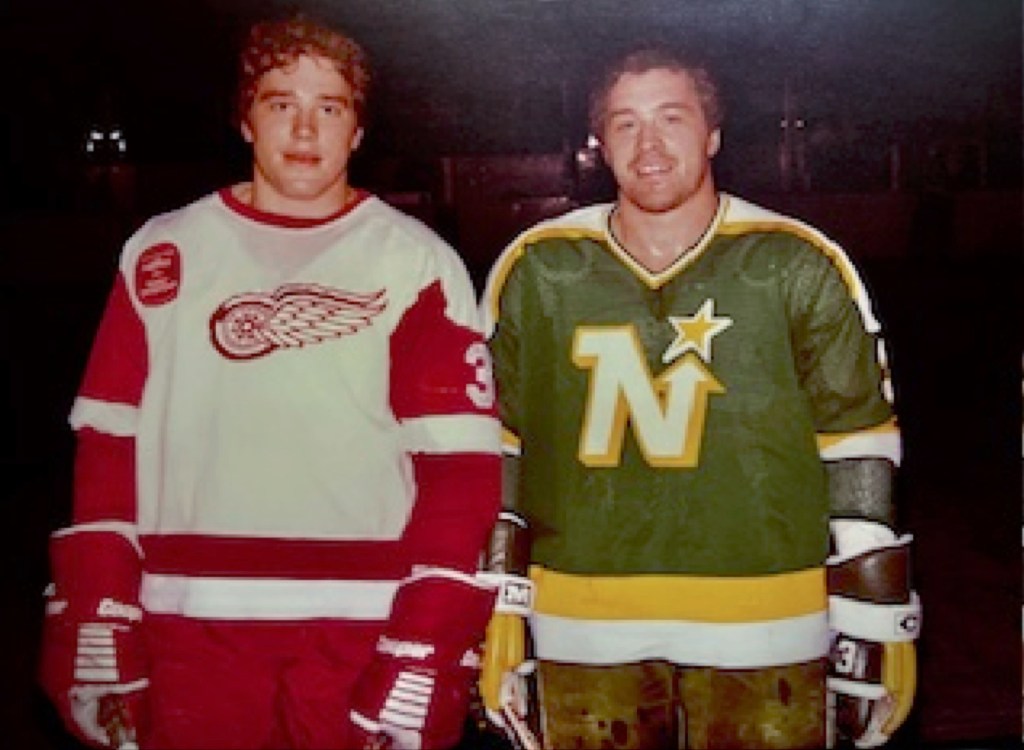
“I played in the NHL against both Fred and John for many years,” writes the Ottawa Senators’ first captain Laurie Boschman. “They were character individuals that I had many battles against … They were tough to play against, and both the type of players you want on your hockey club.”
Firefighter made mark in coaching & fundraising
After his NHL career, John moved back home, applied for and was hired by the Nepean Fire Department where he enjoyed a 23-year career from 1990 to 2013.
John has contributed many years as a coach with Gloucester Rangers minor hockey. And another highlight was the four years he spent coaching girls’ hockey in the National Capital Competitive Program.
John is also a Gloucester Lions Club member and is a past president of the association. He was one of the founding members of the Ottawa Senators Alumni and served as co-president of the group with his brother Fred for a number of years.
“John and Fred, along with their brother George, were very involved in the beginning of this organization, and John and Fred still play a vital role (today),” Boschman highlights. “I can’t tell you how many games, practices, events, they have played in over the years.”
John’s love of the game never wandered and he was a proud member of the Nepean firefighters’ hockey team, playing against other region fire departments and the Ottawa Police and OPP teams. John enjoyed playing in the RA League for many years and was inducted into the Ottawa Valley Hockey Old-timers Honour Role in 1993.
MAY 28 OTTAWA SPORT HALL OF FAME INDUCTION EVENING

Tickets for the Wednesday, May 28th Induction Ceremony are now sold out!
In the lead-up to the banquet, full-length features on each of the inductees and honoured teams will be posted on the Hall’s website at OttawaSportHall.ca and shared through the Ottawa Sports Pages.
Sponsorship opportunities are still available. See OttawaSportHall.ca/Sponsorship for more details.
-30-
Contact:
Dave Best
Chair, Ottawa Sport Hall of Fame
Chair@OttawaSportHall.ca
About the Ottawa Sport Hall of Fame:
The Ottawa Sport Hall of Fame is a non-profit organization, which documents, curates and celebrates outstanding achievement in local sport heritage. The Sport Hall is overseen by a volunteer Board of Directors to maintain and preserve our rich sporting legacies. Each year, the Hall of Fame Board receives nominations from the public and selects new inductees to be honoured in the Hall.

 Ottawa Sport Hall of Fame
Leave a comment