
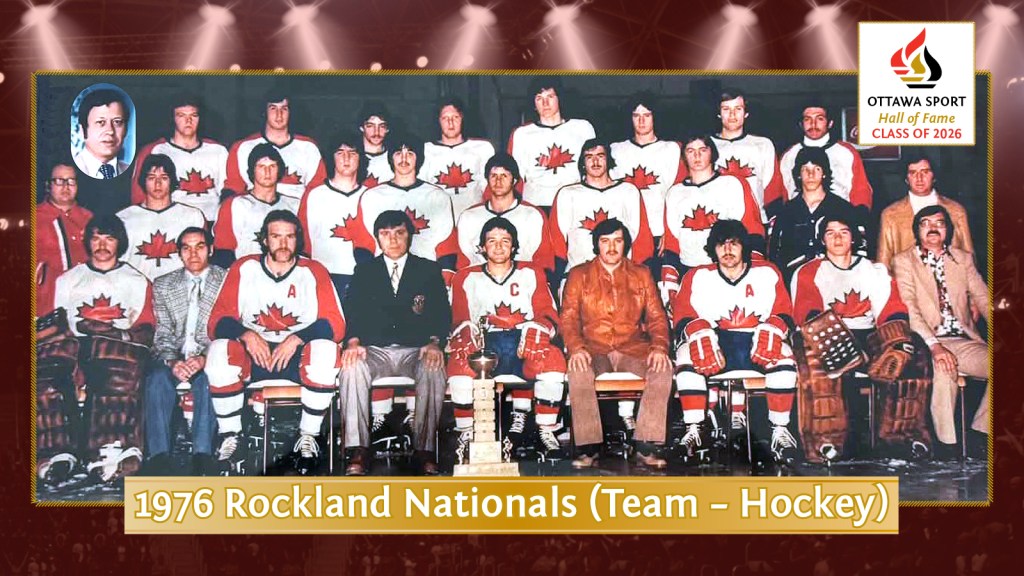
OTTAWA, ON – On Wednesday, May 27th at Lansdowne Park’s Horticulture Building, the Ottawa Sport Hall of Fame will induct the Class of 2026 into our local sports shrine. Each week leading up to the ceremony, the Sport Hall will share an article on our upcoming inductees. Today’s feature is a profile on the 1976 Rockland Nationals.
2026 SPORT HALL INDUCTEE – 1976 ROCKLAND NATIONALS
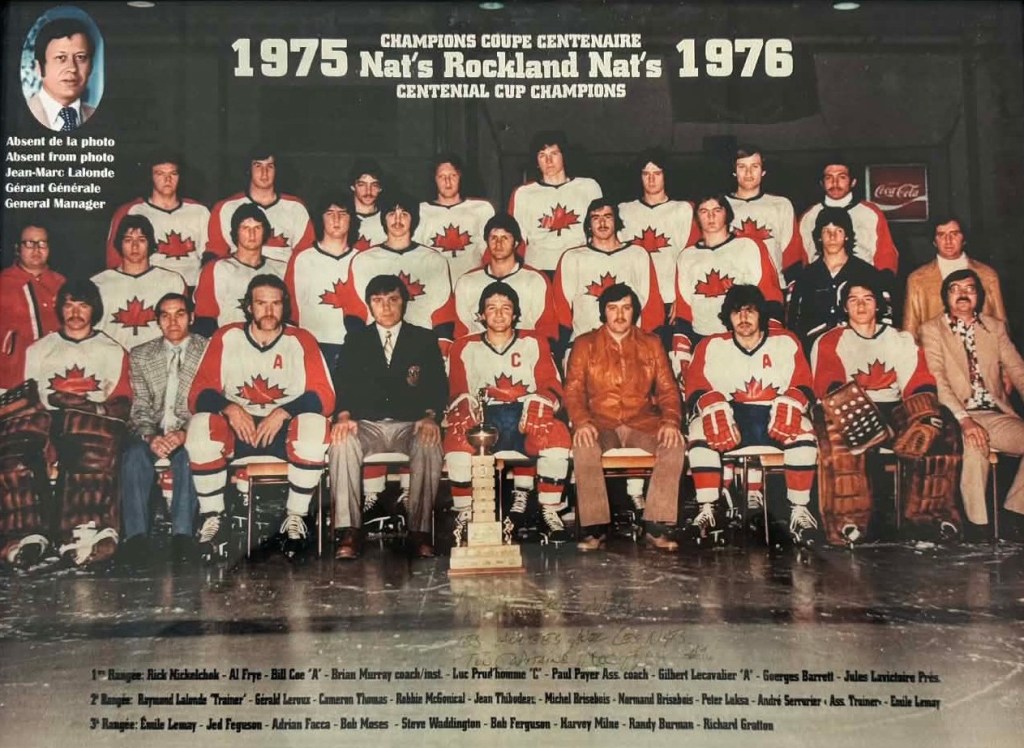
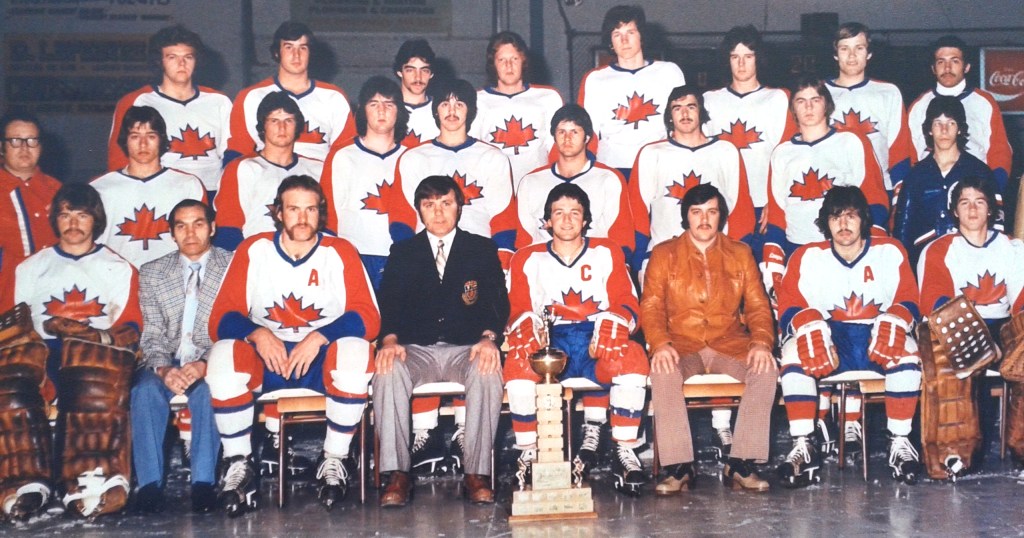
It was something of a miracle the 1976 Rockland Nationals were even present to author the storybook tale of their unlikely Centennial Cup national junior ‘A’ hockey championship.
The Nationals came into existence when (future Rockland Mayor) Jean-Marc Lalonde acquired the rights to the Hull Festivals Central Junior Hockey League club for a single dollar after Hull was awarded a Quebec Major Junior Hockey League franchise in 1973.
Lalonde moved the team some 40 kilometres down the Ottawa River to his hometown of Rockland, then a fledgling community of 4,000.
From the outset, the team had significant financial challenges – Lalonde anticipated they would need 720 fans in attendance at every game at their new arena just to break even. The team finished dead last in its debut CJHL season and lost more than $30,000 in its first two years of existence.
Despite the bleeding ledger, the Nationals grew unwaveringly ambitious in their player recruitment. Over the off-season leading into the 1975-76 campaign, they managed to lure two of the QMJHL’s leading scorers in Michel Brisebois and Jean Thibodeau. Add in Brisebois’ brother Normand, Randy Burman and Guy Crevier – another point-per-game addition from major junior – and very swiftly, the ‘Nats’ became the team to beat.
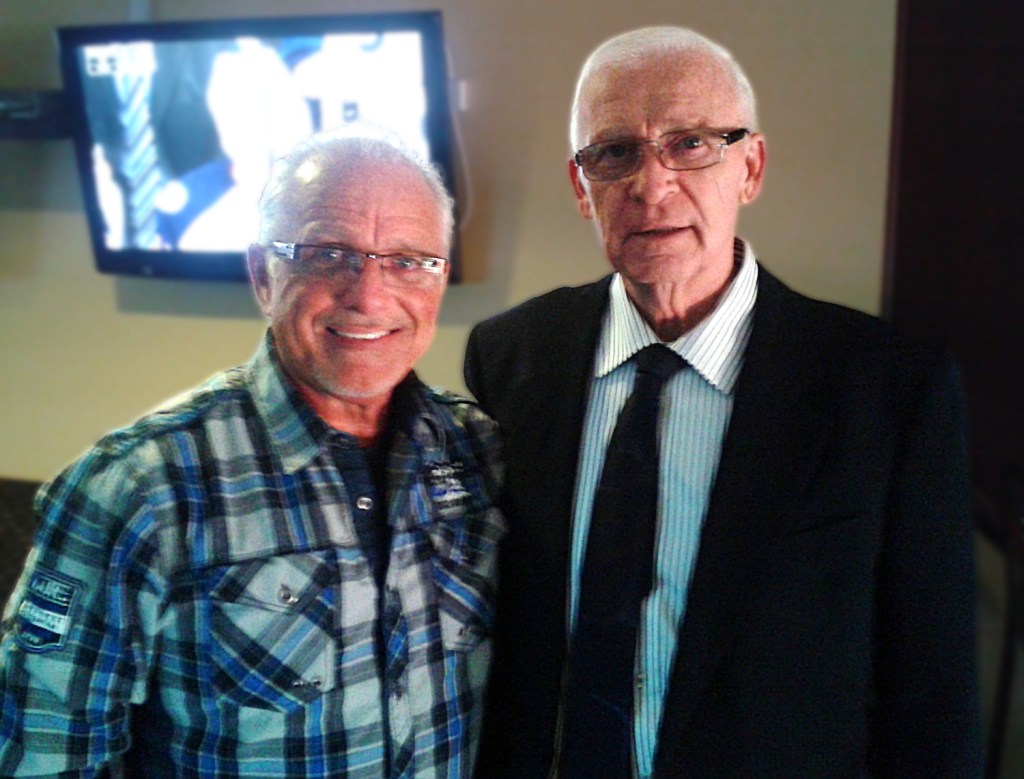
The Nationals made another big add behind the bench in the form of Ottawa Sport Hall of Famer Bryan Murray. Murray would go on to win the Jack Adams as the NHL’s best coach eight years down the line and eventually lead the 2006-07 Ottawa Senators to the Stanley Cup finals.
In 1976, Murray was a crafty 33-year-old, plucked out of the phys-ed department at Macdonald College. Murray made roughly 130 90-minute trips back and forth between Rockland and his home in Shawville, QC over the course of the season, totalling close to 30,000 kilometres travelled.
The Nationals proved dominant in the 1975-76 CJHL regular season. Rockland pulled ahead of the six-team league in late November and never looked back. They finished with a record of 31-11-8, averaging more than six goals per game.
In the playoffs, the Nationals dispatched the Brockville Braves in the first round but then squared off against one of the toughest rivals they’d meet on the road to the Centennial Cup in the CJHL championship series.
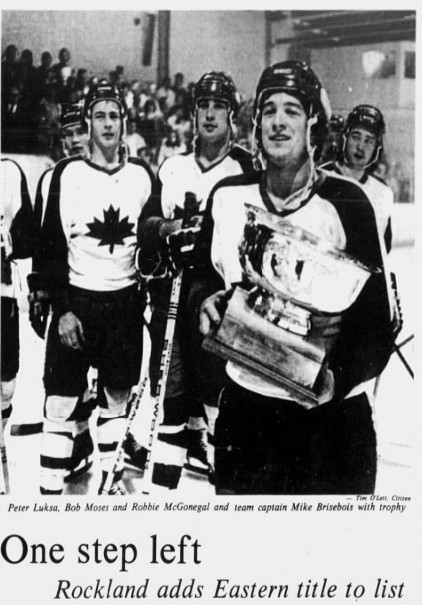
The Gloucester Rangers gave the Nationals many close games and took them to overtime in the deciding game, which was played before more than 1,400 fans in Rockland, drawing just about half of the town’s population.
Murray was gifted the traditional post-game victory shower, full clad, after the triumph.
“I’ve enjoyed the season thoroughly,” Murray told fellow future Ottawa Sport Hall of Famer Tom Casey of the Ottawa Citizen. “It’s been a new challenge for me handling so many good hockey players. I’ve never had so many good ones to work with.”
That success guaranteed nothing in the battle for the Centennial Cup, which no CJHL team had ever won. The Nationals topped the Lac Megantic Royals 4-1 in their next series, but then faced off against the vaunted SOJHL championship-winning Guelph Platers in the national quarterfinals. Centennial Cup finalists a year ago, the Platers jumped out to a 3-0 series lead, outscoring Rockland 16-4.
“They’re forechecking us to death,” Murray lamented to Ottawa Journal reporter Ken Fidlin. “This team is all big and they’re pushing us around.”
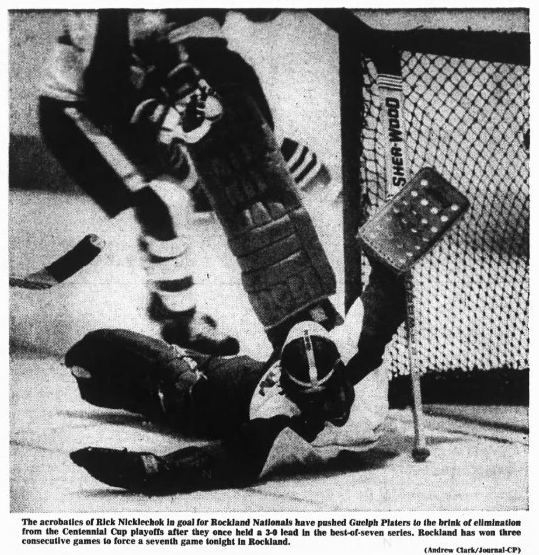
When the Nationals fell behind 3-0, they were ready to take the ice out for the season in Rockland, but Lalonde (prophetically) told them to keep it in.
It proved to be Rick Nickelchok, the diminutive netminder the Nationals had acquired from Brockville after winning their championship, who came to the rescue.
Nickelchok, a Guelph-Kitchener native who felt he had been lowballed by the Platers during the off-season, made himself a brick wall in the final five games of the series. Rockland bounced back with 5-3 and 4-1 wins, Nickelchok stopping 74 of 78 shots in the process.
“These kids are pretty damn proud – they just wouldn’t quit,” Murray told the Waterloo Region Record‘s Larry Anstett.
After playing their first two home games in Hull to dwindling attendance numbers, the Nats returned home to force a Game 7 before 1,500 flabbergasted fans. They proceeded to drub the Platers 9-3 on their own ice. Michel Brisebois, who missed part of the series to avoid falling behind at law school, scored four goals.
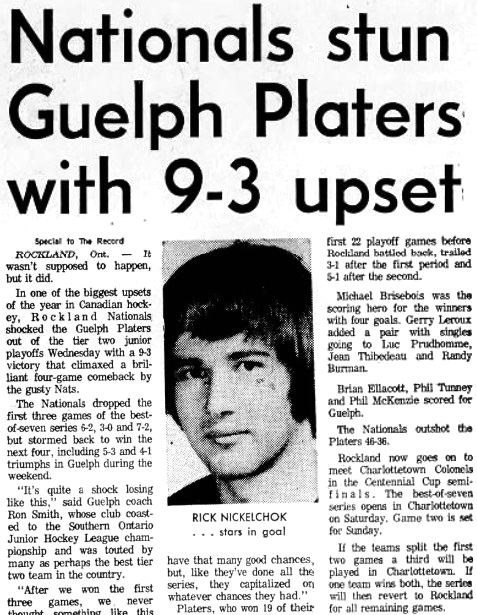
“Before the series, everything we heard was that Guelph was the best team in Canada. Well, now I think some people have to take a long look at us,” Murray told Fidlin.
“They came on like a big rock rolling downhill and we got run over by it,” Platers coach Ron Smith told The Canadian Press.
Not even a bad flu bug could thwart the Nationals in their semifinal matchup against the Charlottetown Colonels of the IJHL. Hardcore fans filled two 40-seat planes on chartered flights to Prince Edward Island.
“People were borrowing money from the bank to follow the team,” Lalonde reflected in 2008 for a Cornwall Standard-Freeholder story by Kevin Lajoie.
Their sweep of the Colonels served as a coming out party for 17-year-old rookie Gerry Leroux. The small, speedy winger had been quiet against Guelph, but chipped in with two goals in the final game.
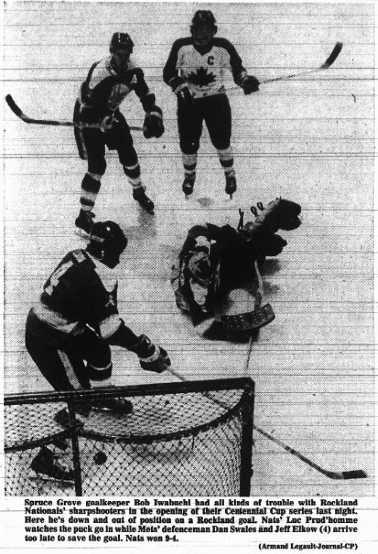
Rockland was pitted against the defending Centennial Cup-champion Spruce Grove Mets in the finals. Before the series, the Nationals issued a questionnaire to fans, asking whether they would prefer to hold their remaining home games in Ottawa for discounted ticket prices. By a vote of 862-59, fans demanded they remain in Rockland.
Extra seats were added to the arena to allow 1,700 fans in for the championship series.
That final series was an eminently physical affair. Several brawls took place during pre-game warmups, forcing referees onto the ice before they even had time to lace up their skates. Both coaches accused each other of encouraging violent play.
In the end, the Nationals emerged victorious in five games. Leroux, who scored eight goals in their four wins, was named tournament MVP. Leroux would go on to play professionally in the United States and Switzerland and was briefly Wayne Gretzky’s teammate in The Great One’s rookie season with the WHA’s Indianapolis Racers.
The run to the Centennial Cup unfortunately only exacerbated the Nationals’ financial troubles, the large travel bill of repeatedly taking the team across the country adding up.
The club was forced to fold a season later. That reality ultimately inspired a format change for the national junior ‘A’ playoffs, ushering the round-robin tournament still in use today.
Although their initial run in Rockland was short, the impact of the 1976 Nationals on their community never faded.
In 2017, the CCHL’s Gloucester Rangers relocated to Clarence-Rockland and readopted their old name, complete with their characteristic maple leaf.
Fifty years later, the ’76 Nationals’ feats have perhaps only been magnified over time. They remain just one of two Central league teams to ever win the Canadian junior ‘A’ crown.
The current Nationals, however, have a chance to further enhance the storybook nature of this tale. As the 1976 Nationals get set to enter the Ottawa Sport Hall of Fame on the 50th anniversary of their Centennial Cup championship, Rockland is set to compete at the 2026 Centennial Cup from May 7-17 in Summerside, P.E.I.
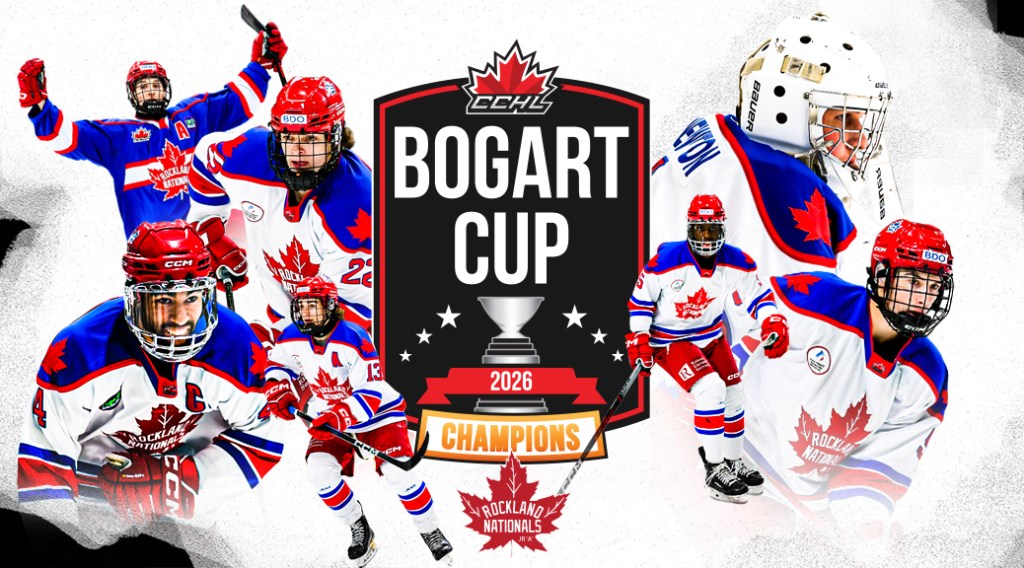
The Nationals won 26 games in a row at one point this season as they plowed to a 52-3 regular season, and then lost just once in 13 CCHL playoff games to capture the Bogart Cup. The Nationals enter the nationals ranked first in the country.
MAY 27 OTTAWA SPORT HALL OF FAME INDUCTION EVENING

The Ottawa Sport Hall of Fame will be welcoming four new athletes, a builder and a team as part of its Class of 2026, plus eight more historic honourees in the Legacy Category.
More details and full features on all the upcoming inductees and Legacy members will be shared in the weeks leading up to the 2026 banquet on the Hall’s website at OttawaSportHall.ca and through the Ottawa Sports Pages.
Tickets for the Wednesday, May 27th Induction Ceremony at Lansdowne Park’s Horticulture Building are very close to selling out! Make sure to book one of the final places here.
Sponsorship opportunities are available. See OttawaSportHall.ca/Sponsorship for more details.

About the Ottawa Sport Hall of Fame:
The Ottawa Sport Hall of Fame is a non-profit organization, which documents, curates and celebrates outstanding achievement in local sport heritage. The Sport Hall is overseen by a volunteer Board of Directors to maintain and preserve our rich sporting legacies. Each year, the Hall of Fame Board receives nominations from the public and selects new inductees to be honoured in the Hall.
 Ottawa Sport Hall of Fame
Leave a comment